Why It Happens Here
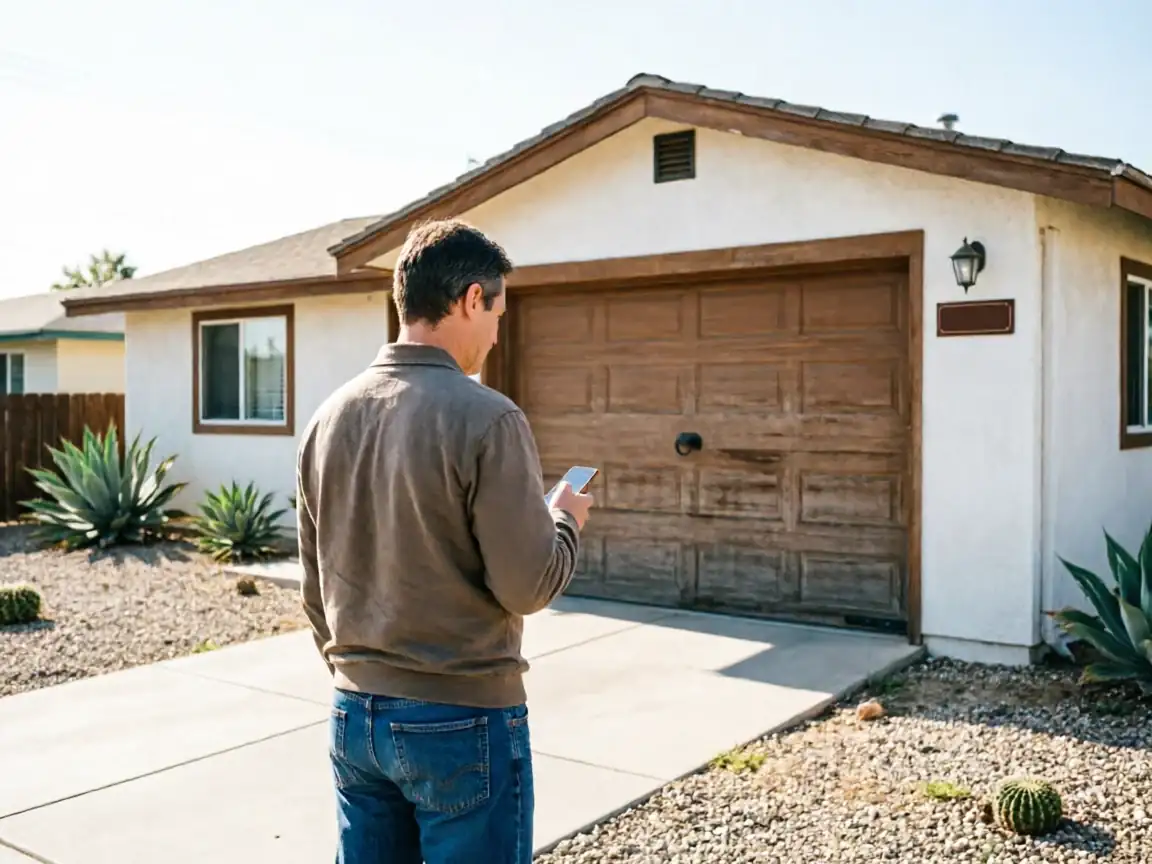
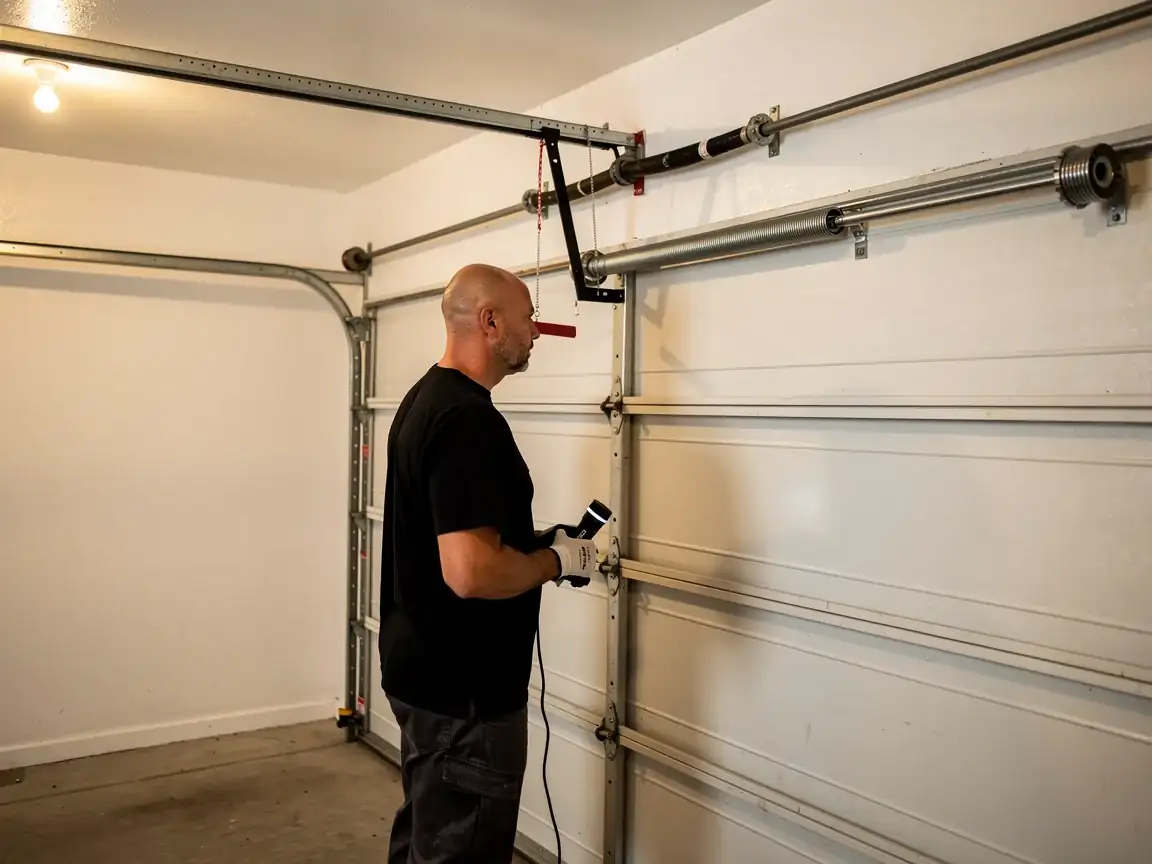
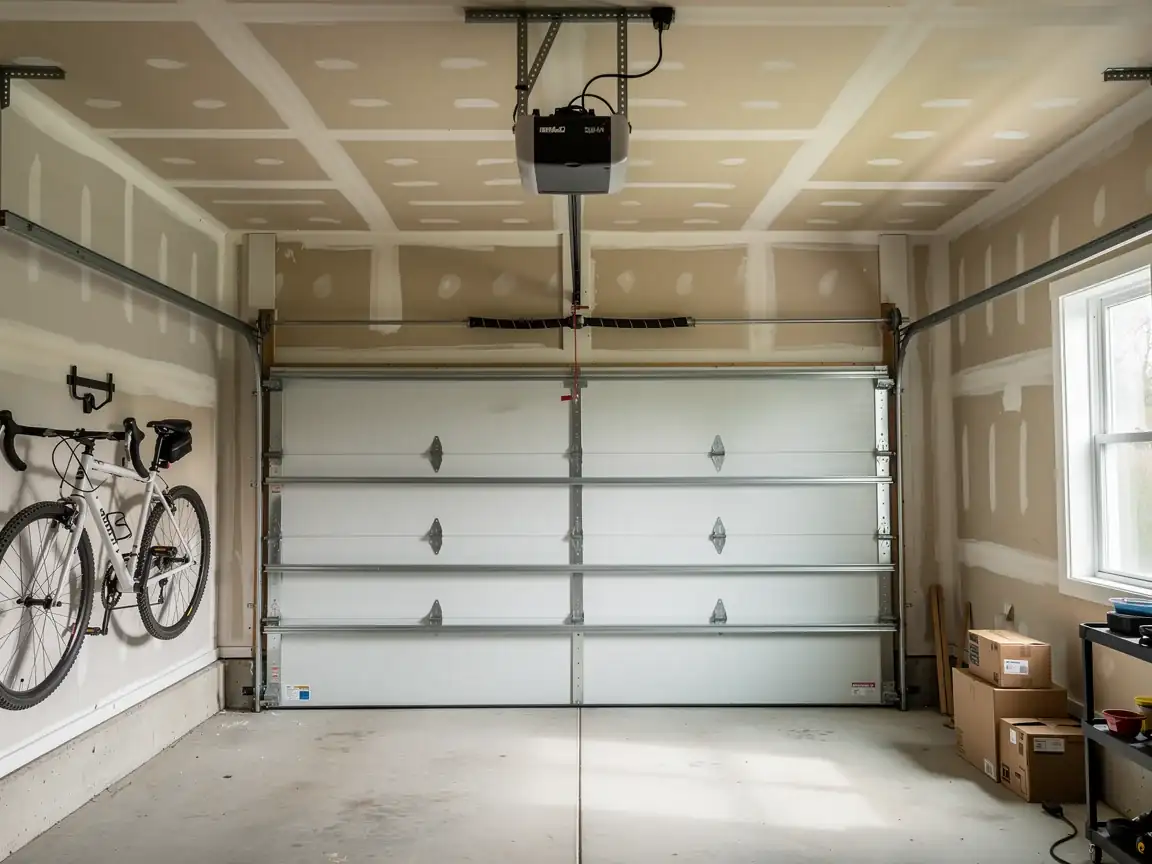
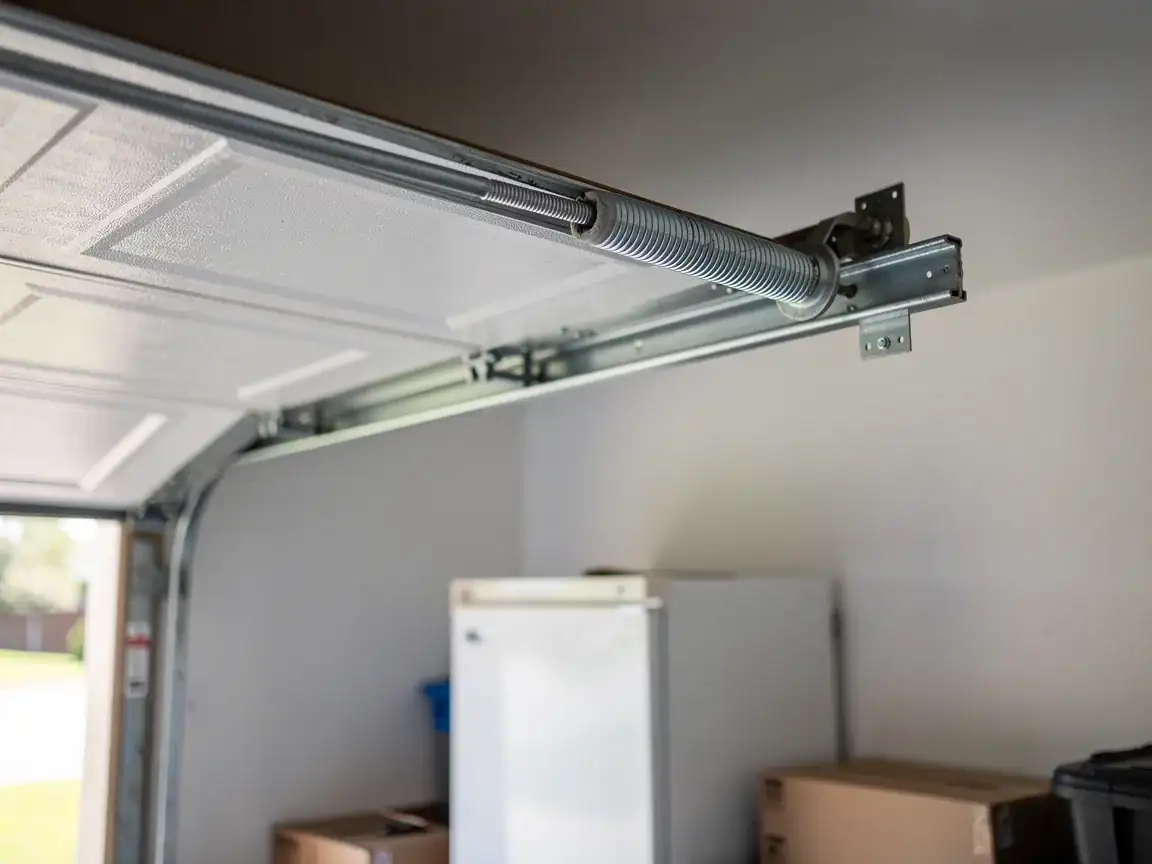
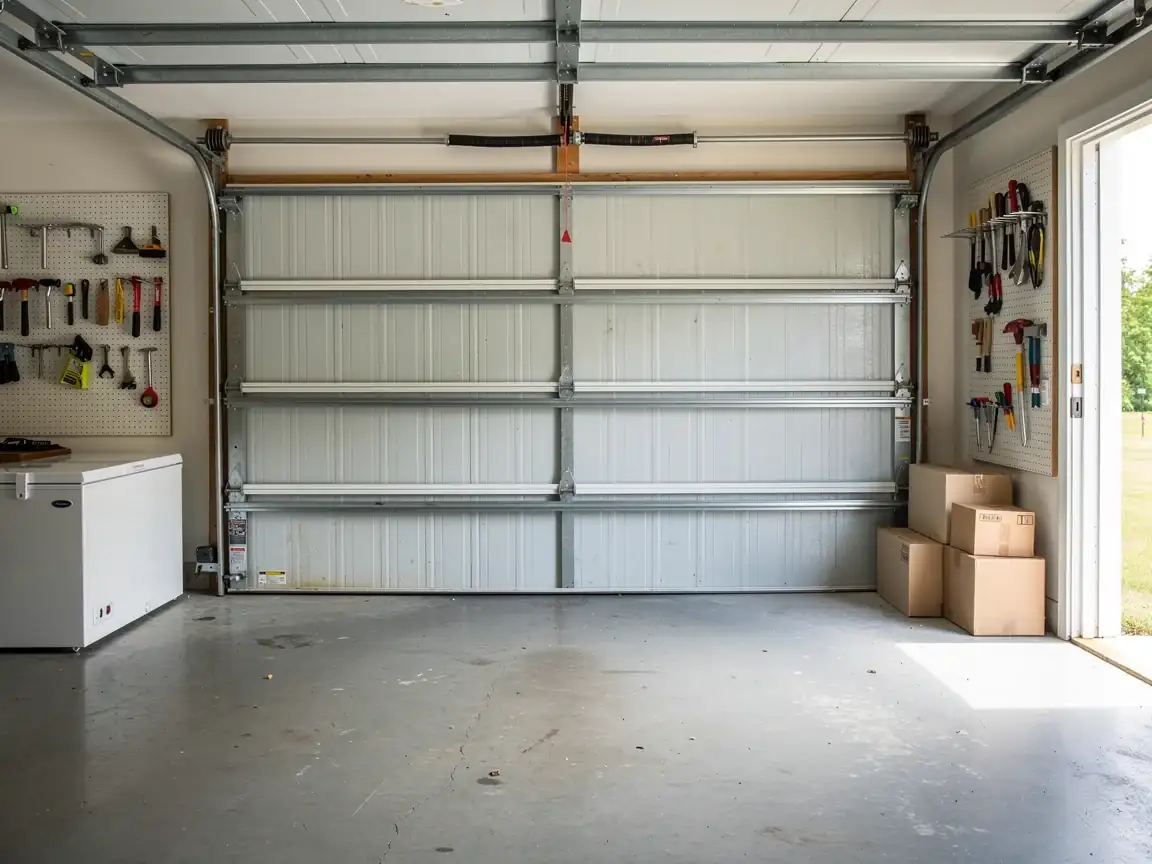
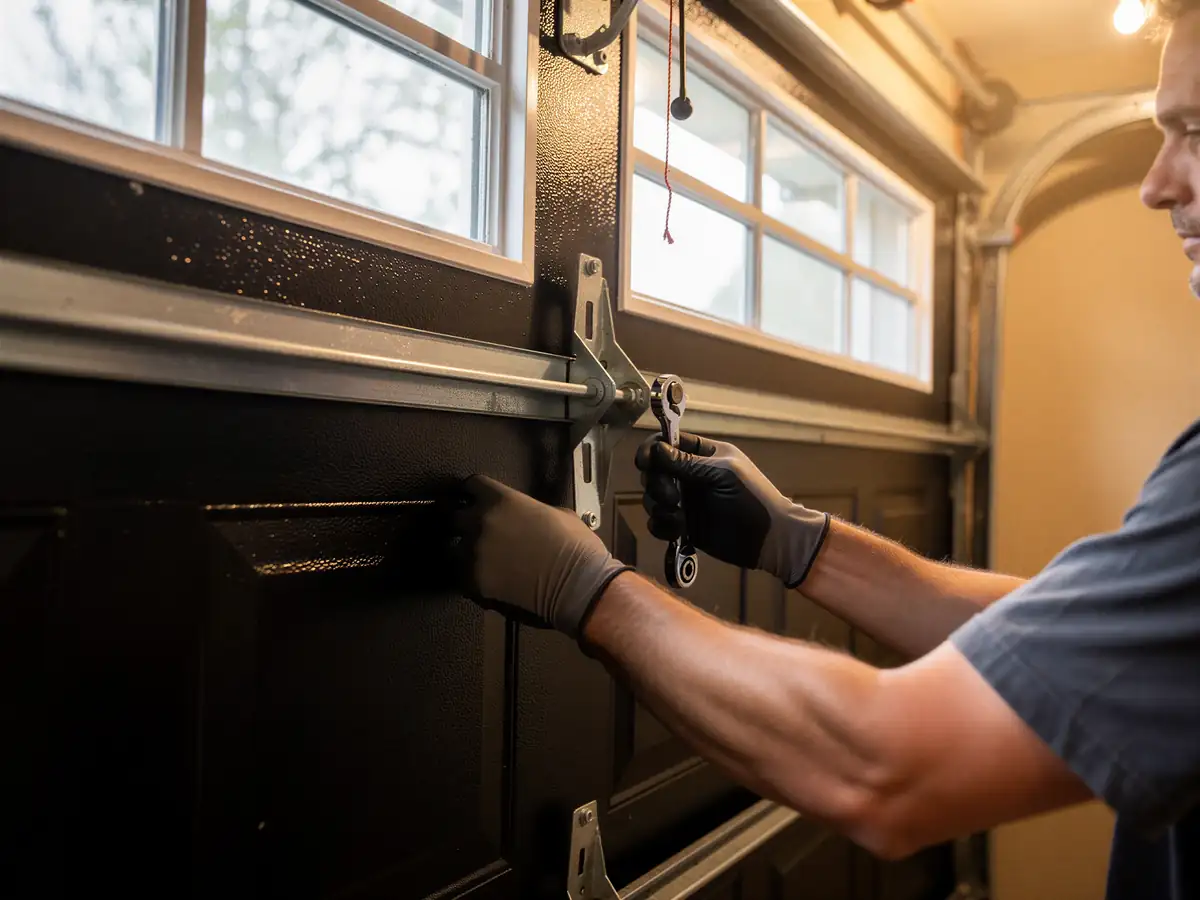
Rossmoor is a small place - about 3,970 households, most of them inside a tract built around 1959. That size matters for how this job shows up. There isn't a mix of eras here the way you'd see in a bigger city; it's largely one generation of doors, one generation of cable drums, one generation of hardware, all aging at close to the same rate. When we get a call from this area, the symptom is rarely a one-off defect. It's usually the original galvanized aircraft cable, now past sixty years old, finally giving out on a torsion setup that was never upgraded. The lifted lift cables on these doors were sized for the steel panels of that era, and decades of expansion and contraction in a mild coastal climate wear the strands thin at the drum end long before the owner notices anything beyond a little sag or a door that leans when it's halfway up. Rossmoor's median household income runs well above the regional figure, which in practice means owners here are more likely to replace a tired cable system outright rather than patch it twice and call us a third time.
What It Costs
We don't have a posted price for this job and won't invent one here. Cable repair pricing depends on whether it's one cable or a pair, whether the drums need replacing alongside the cable, and whether the door is a single or a double - doubles on original torsion hardware run a different parts list than a single. What we can tell you honestly: on houses from this 1959 tract, we almost never find a job that's just a cable with nothing else touched by sixty years of use. Budget for that conversation when you call, not for a number we'd be guessing at.
Where This Job Goes Sideways
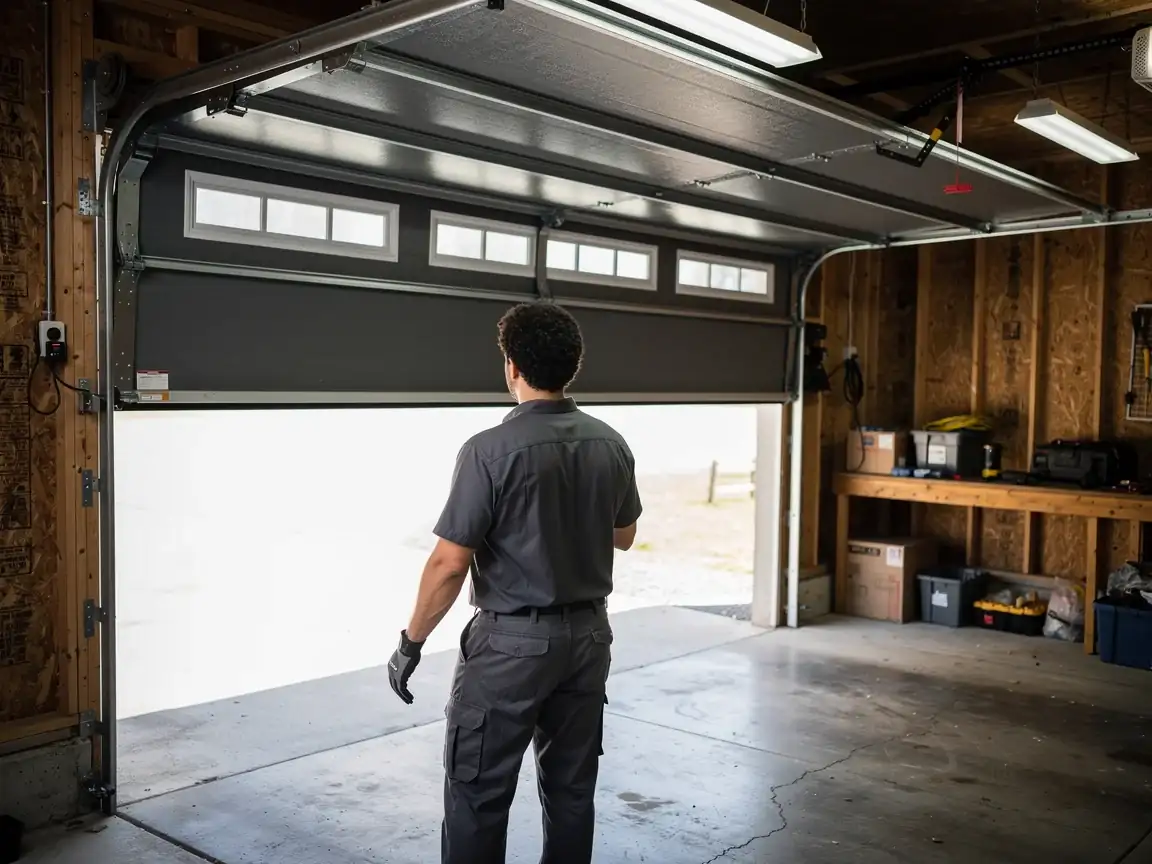
The failure mode that turns a simple cable swap into a longer job is a drum that's worn past spec. If the cable groove has cut deep enough, a new cable seats wrong and frays again within months - we've seen it on houses this age elsewhere in the service area, and the fix is a drum replacement, not a second cable. Another one: if the door was converted at some point from extension springs to torsion, or vice versa, the cable routing won't match factory diagrams, and we have to work out the actual geometry on site instead of ordering by model number. On a house built in 1959 that's gone through one or two owners, we treat that kind of undocumented change as the rule, not the exception.
The Symptom
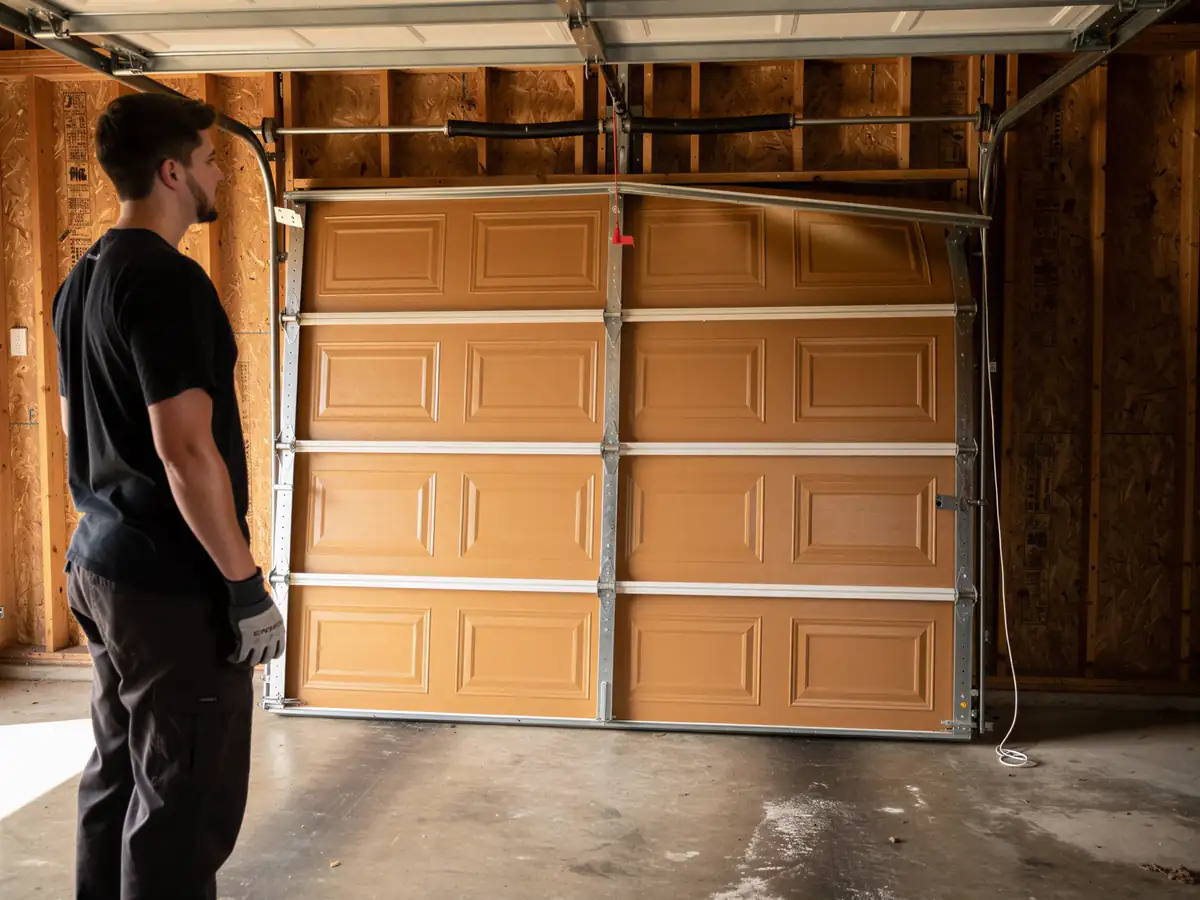
A cable going bad rarely snaps with no warning. Watch for a door that tilts to one side as it travels, a visible fray or kink near the bottom bracket, or a loud bang followed by the door refusing to move - that last one usually means it already broke. On the original hardware common to this neighborhood, we also see slow stretching: the door starts sitting unevenly in the frame months before anything fails outright. If you notice the gap at the bottom isn't level anymore, that's worth a call before it becomes a door stuck halfway down.