How Local Conditions Play In
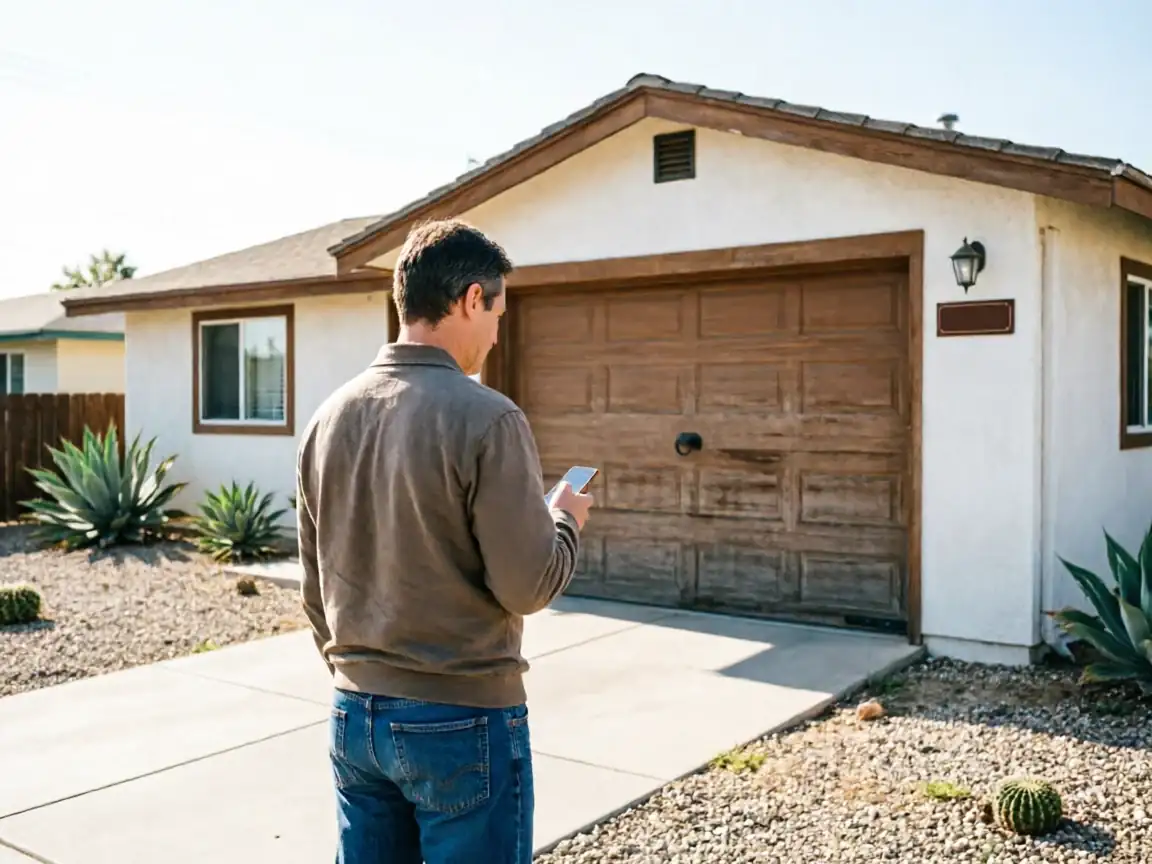
Long Beach doesn't get the freeze-thaw cycles that crack slabs apart or the brutal heat swings that warp track brackets in places with real seasons. The climate band here is mild temperate, and that's actually part of the problem - not the dramatic kind of problem, the slow kind. A garage in a harsh climate gets attention because it screams at you. A garage in Long Beach just quietly drifts, year after year, and nobody notices until the door won't close.
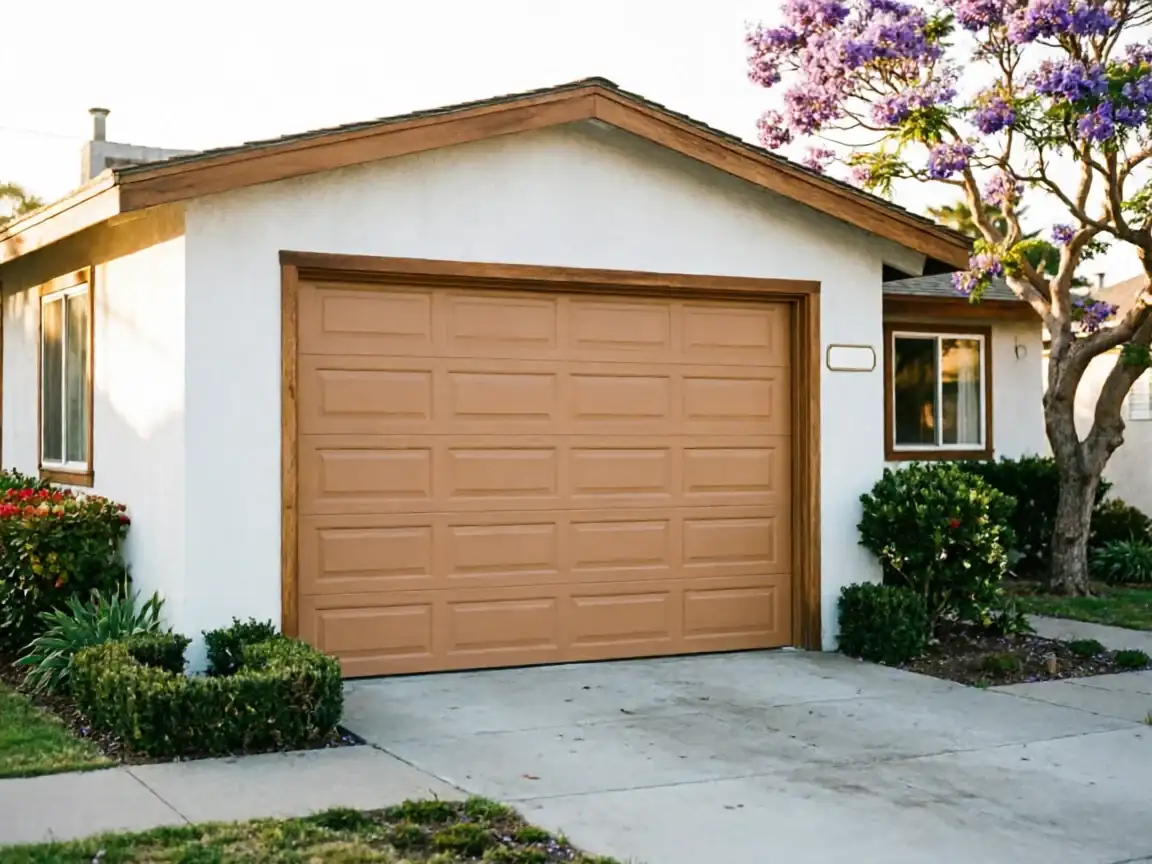
Most of the housing stock in this service area went up between 1947 and 2012, with a median build year of 1964. That's a lot of concrete slab poured over nearly six decades, in neighborhoods from down to the the district. Slabs that old settle unevenly, a little at a time, with no single event you can point. The sensor brackets mounted to the track or the wall don't move because of one storm - they move because the slab under them has shifted a sixteenth of an inch a year for forty or fifty years.
That's the Long Beach version of sensor drift: not sudden, not dramatic, just cumulative.
The Problem
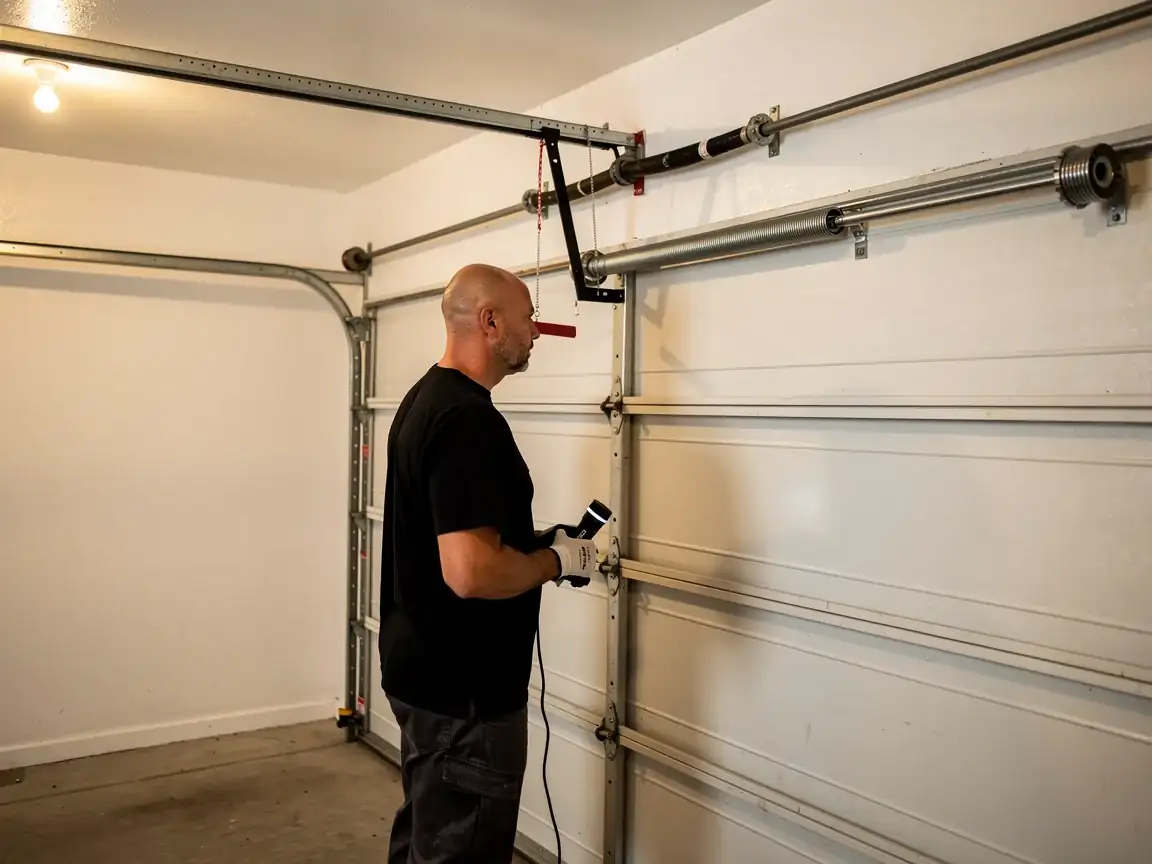
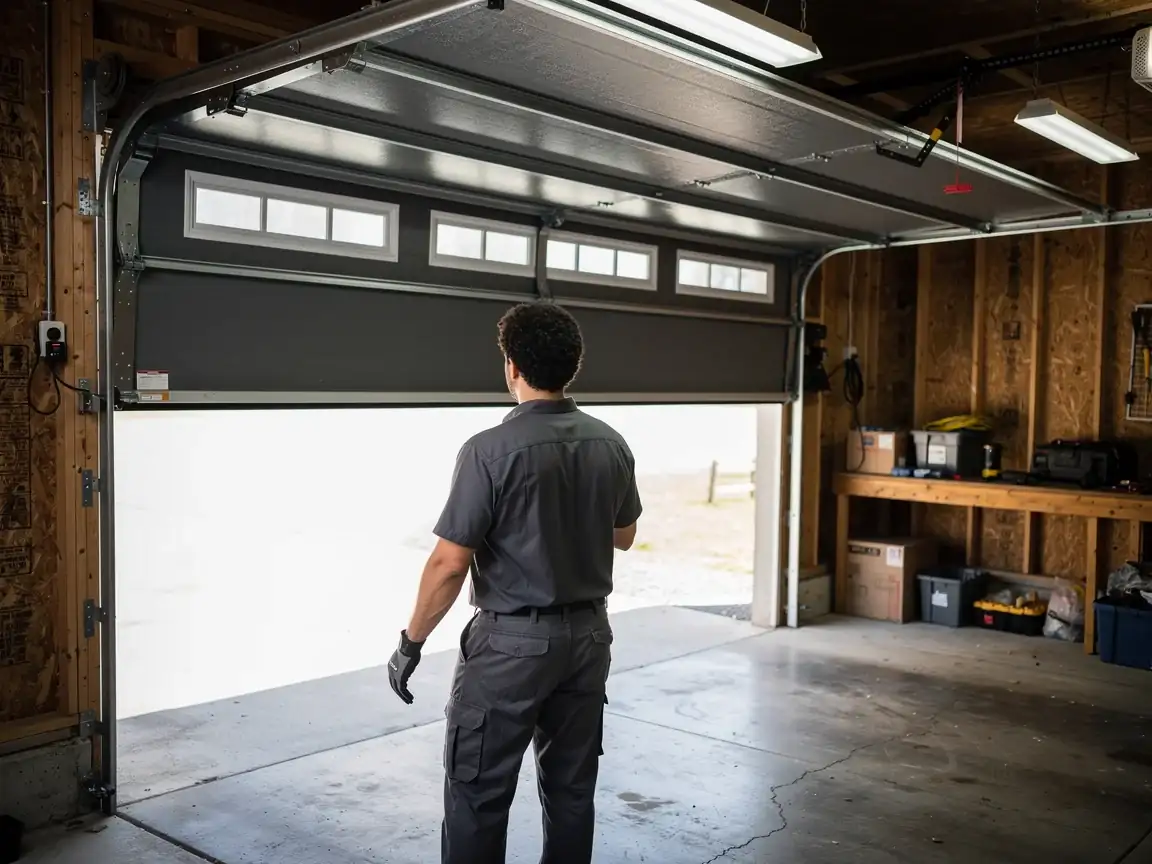
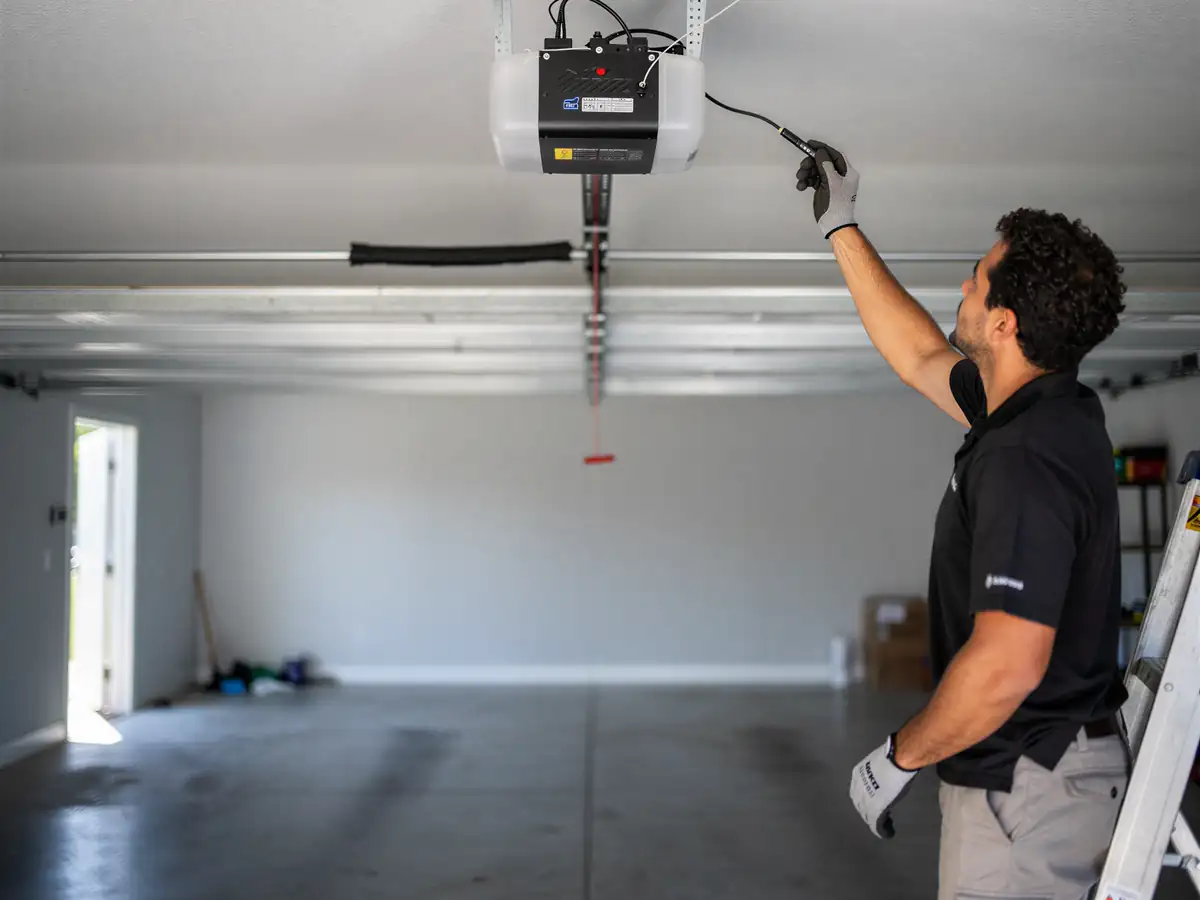
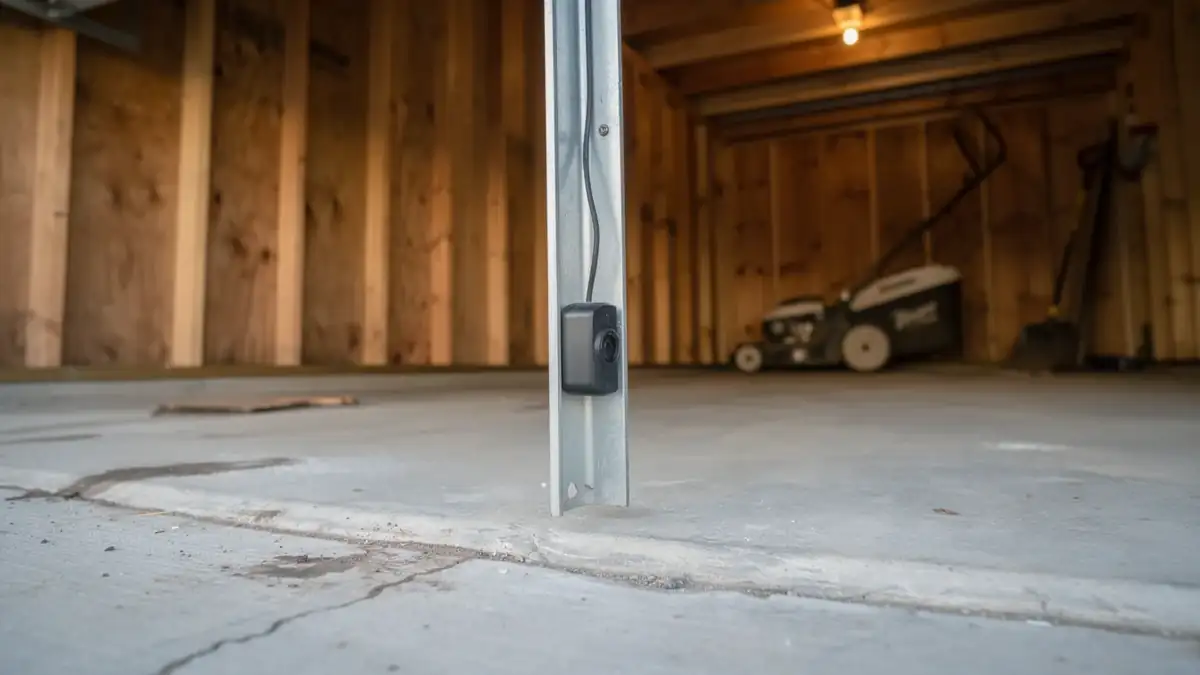
Safety sensors - the two eyes low on either side of the door opening
Have to stare at each other in a dead straight line. Knock that line off by even a few degrees and the opener either refuses to close the door or, worse, ignores a sensor that's technically still working but aimed at the wrong angle.
In a 1964-built garage (the median age for houses across this area's 58 named communities)
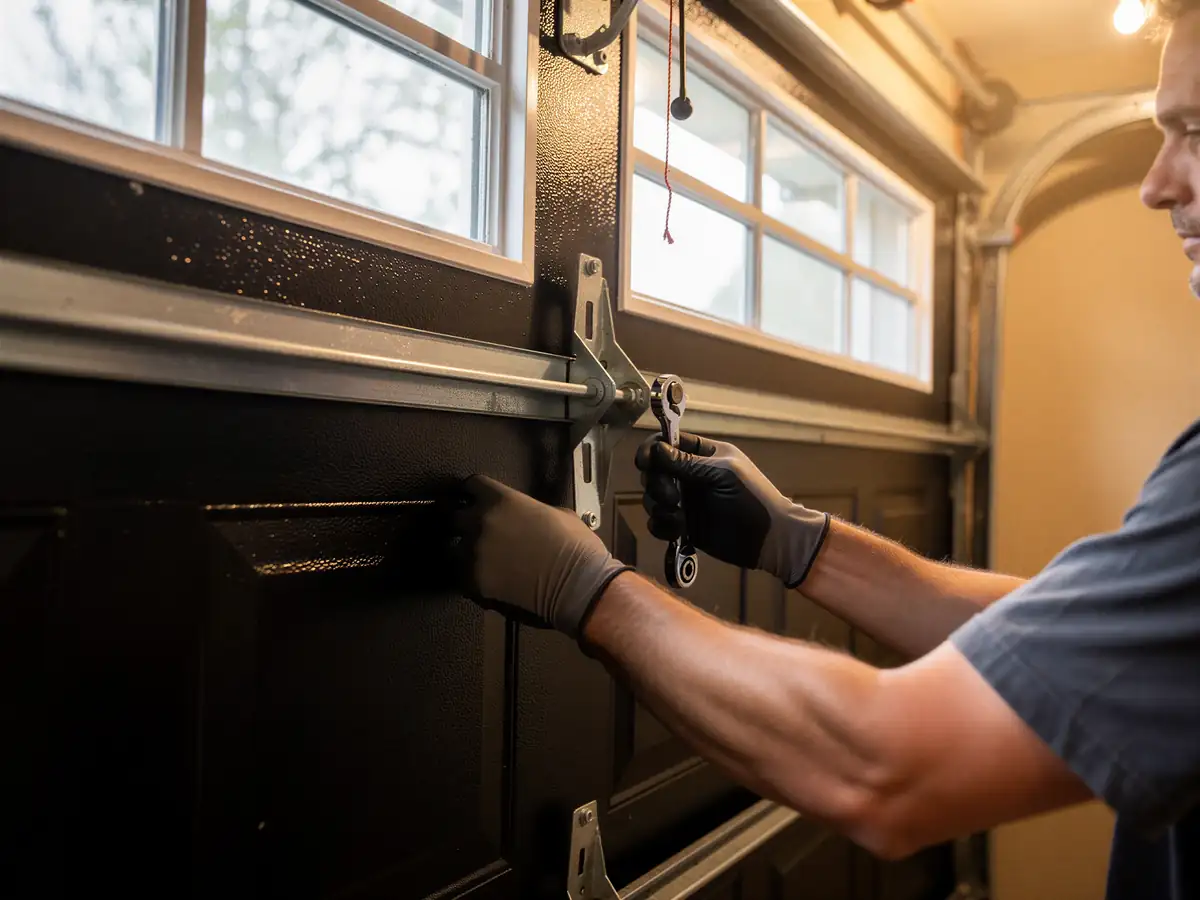
The sensor brackets are usually screwed into wood framing or masonry that's had decades to move. The bracket itself didn't fail. The wall around it settled, the track shifted a fraction, and now the sensor's beam clears the opposite eye by an inch instead of hitting it square.
Humidity isn't the main driver here the way it would be somewhere with real seasonal swings
Long Beach's mild climate keeps that part fairly steady. The driver is just age and settling: older concrete, older framing, decades of small shifts nobody corrected because nobody could see them happening. It shows up as the door reversing for no visible reason, or closing fine on Tuesday and refusing on Thursday with nothing obviously changed.
When to Get Help
If the door reverses right before it touches the floor, or the opener's indicator light blinks a fault code, that's sensor misalignment - not a motor problem, not a spring problem. You can try this yourself first: loosen the wing nuts on both sensor brackets, nudge them until the lights go solid, and retighten. On a lot of Long Beach houses this holds for a while and then needs doing again in six months, because the slab hasn't stopped settling.
Call for a visit when the sensors won't hold alignment for more than a few weeks at a time, or when one bracket is visibly loose in cracked or crumbling material - that's not a sensor fix, that's a mounting problem that needs new anchor points. Also call if you've got an older opener from a house near the 1964 median build year with its original sensor wiring; cracked insulation on decades-old low-voltage wire causes intermittent faults that look exactly like misalignment but aren't.
What Most People Get Wrong
The most common mistake is treating sensor drift as a one-time fix. People realign the eyes once, the door works for a month, and they figure it's solved. In a house from this era, with a slab that's been moving gradually since the 1960s or earlier, realignment is maintenance, not a repair - something to check every so often, the same way you'd check a gate hinge.
The second mistake is blaming the opener. Most service calls that start as "my opener is broken" turn out to be a sensor aimed a half-inch off. Swapping the opener doesn't fix a bracket that's mounted to a wall which has settled.
Honest limitation: if the bracket's anchor point is cracked masonry or rotted trim, realigning the sensor is a temporary patch. The real fix is a new mounting point, and that's worth doing once instead of fighting the same drift every few months.