How Local Conditions Play In
Long Beach sits in a mild temperate band, no hard freezes, no real humidity swings that most of the country deals with. That sounds like it should mean quieter garage doors, and in a lot of ways it does. You don't get the ice-cracking or wood-swelling noises that show up in colder climates. But mild doesn't mean dry air forever. The marine layer that rolls through neighborhoods like and the puts a steady low-grade moisture on steel hardware year after year, and that works slowly on galvanized track, spring coils, and roller shafts even without a single dramatic storm. Combine that with housing stock built mostly between 1947 and 2012, with a median build year around 1964, and you get a specific pattern: original torsion hardware from the 1960s and 70s that's been quietly oxidizing for decades in mild weather, not wearing out from heat or cold cycling the way doors do inland. The noise you hear today in a house is often less about this week's weather and more about fifty-plus years of marine air meeting original steel. That's the backdrop for everything below.
When to Get Help
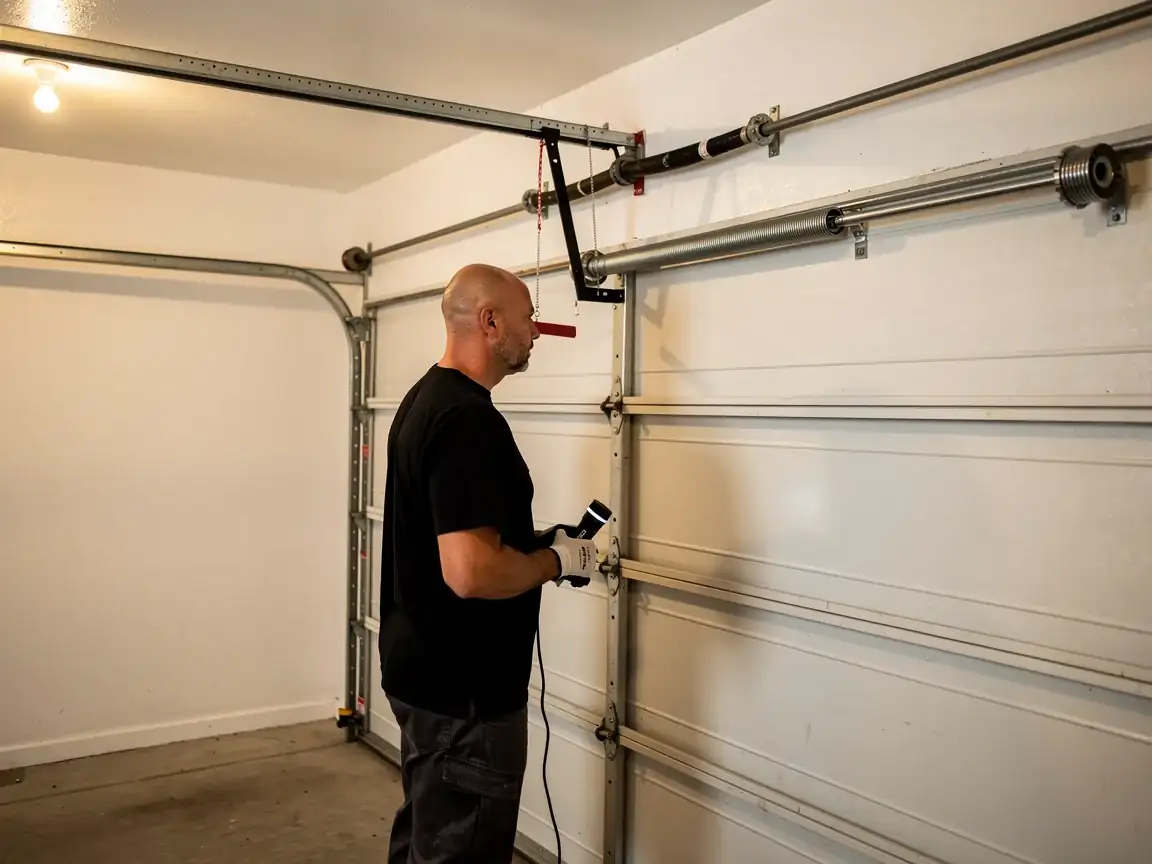
Some noises are just information, not an emergency. A single soft click on close is often just the opener settling. But a loud bang, especially from the spring area, means a torsion spring let go or is close to it, and you should not run the door or try to open it manually until it's looked at. Torsion springs hold real tension and this isn't a tighten-a-bolt fix. Grinding that's gotten noticeably louder over a few weeks usually means a roller or bearing is close to failing, and letting it ride can take the track with it. If a door that used to run quiet now groans every cycle, that's wear accumulating, not noise that goes away on its own. Given how much of the housing here still runs on hardware installed decades ago, a noise that's new this year is often a part that's been degrading since well before you noticed it.
What Most People Get Wrong
The most common mistake is spraying WD-40 on a noisy spring or track and calling it fixed. It quiets things down for a week, sometimes less, because it's a solvent, not a lubricant, and it doesn't address rust or a worn roller underneath. The second mistake is assuming a quiet door is a healthy door. In this climate, corrosion on original 1960s-70s track and hardware can progress for years without making noise until a part finally fails outright. We'll say plainly: we don't recommend trying to re-tension a torsion spring yourself, and we don't always recommend repair over replacement on original hardware that old, since some of those parts simply aren't made anymore and sourcing them can take longer than homeowners expect. Sometimes the honest answer is that a 1960s torsion system has done its job and a new one will outlast another round of patch repairs.