How Local Conditions Play In
Long Beach sits in a mild temperate climate - no hard freeze, no deep thaw cycle grinding on metal every winter. That matters for how doors fail here. In a lot of the country, cold snaps crack springs and warp panels on a schedule. Here, failure is almost always fatigue, not weather. A spring breaks because it's done its cycle count, not because it froze overnight.
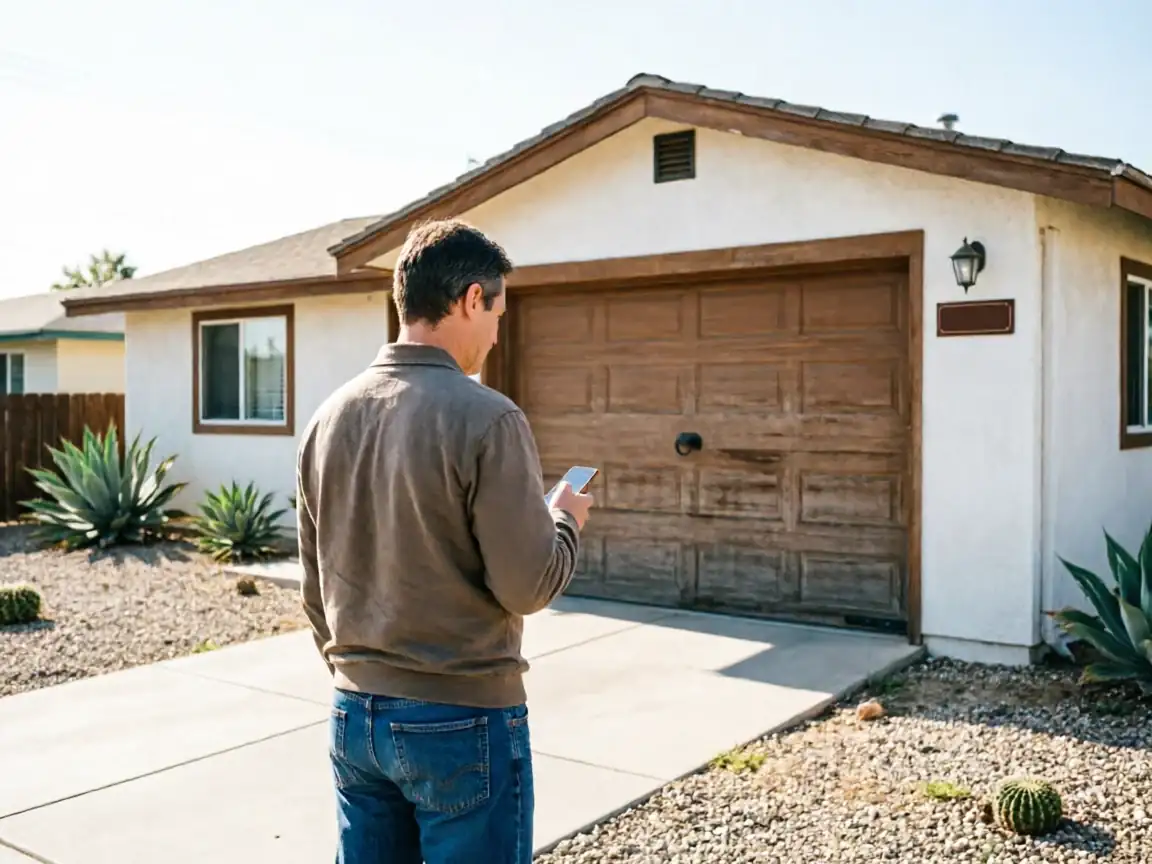
The other local factor is age of stock. Housing across the service area went up mostly between 1947 and 2012, with a median build year of 1964, and the bulk of it is 1960s-70s construction. That means the garage door and opener on a huge share of these houses is either original or a first-generation replacement - torsion hardware, drums, and track sized for a door style that isn't what's sold today. Across the 58 named areas we cover, from the to to the age of what's hanging in a given garage tracks pretty closely with when that block was built. That's the backdrop for every repair-or-replace call we make - it's not abstract, it's the actual hardware on the actual house.
The Problem
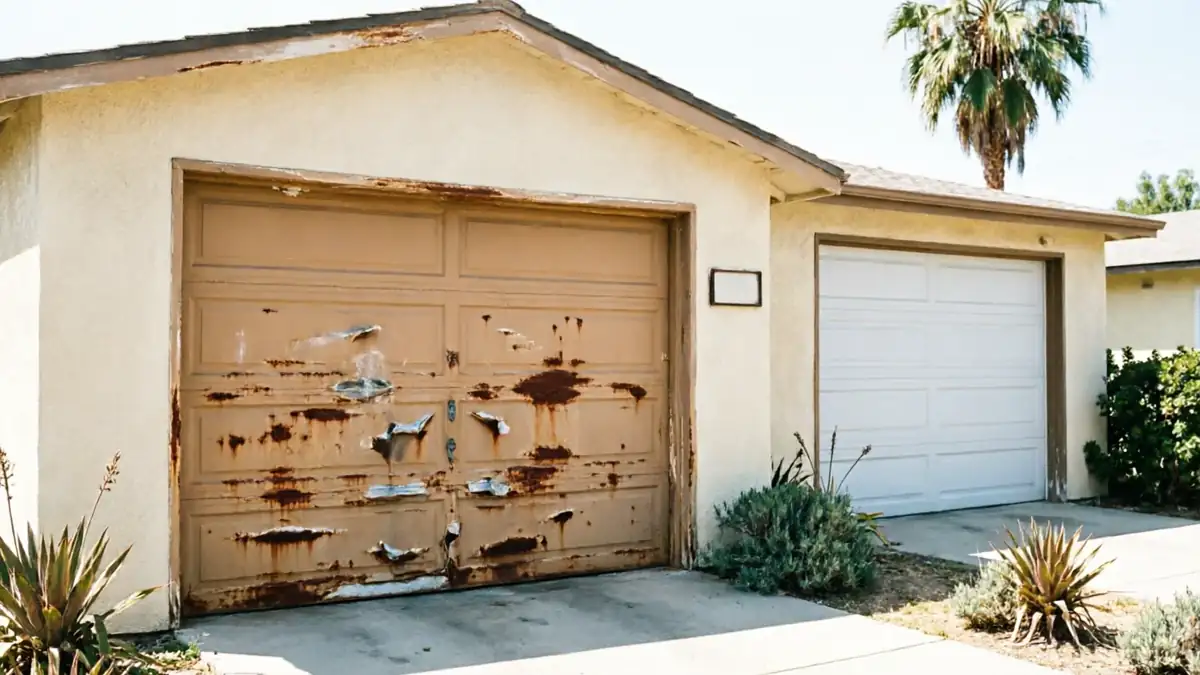
A door from that 1960s-70s wave of construction was built to a different standard than what goes up now
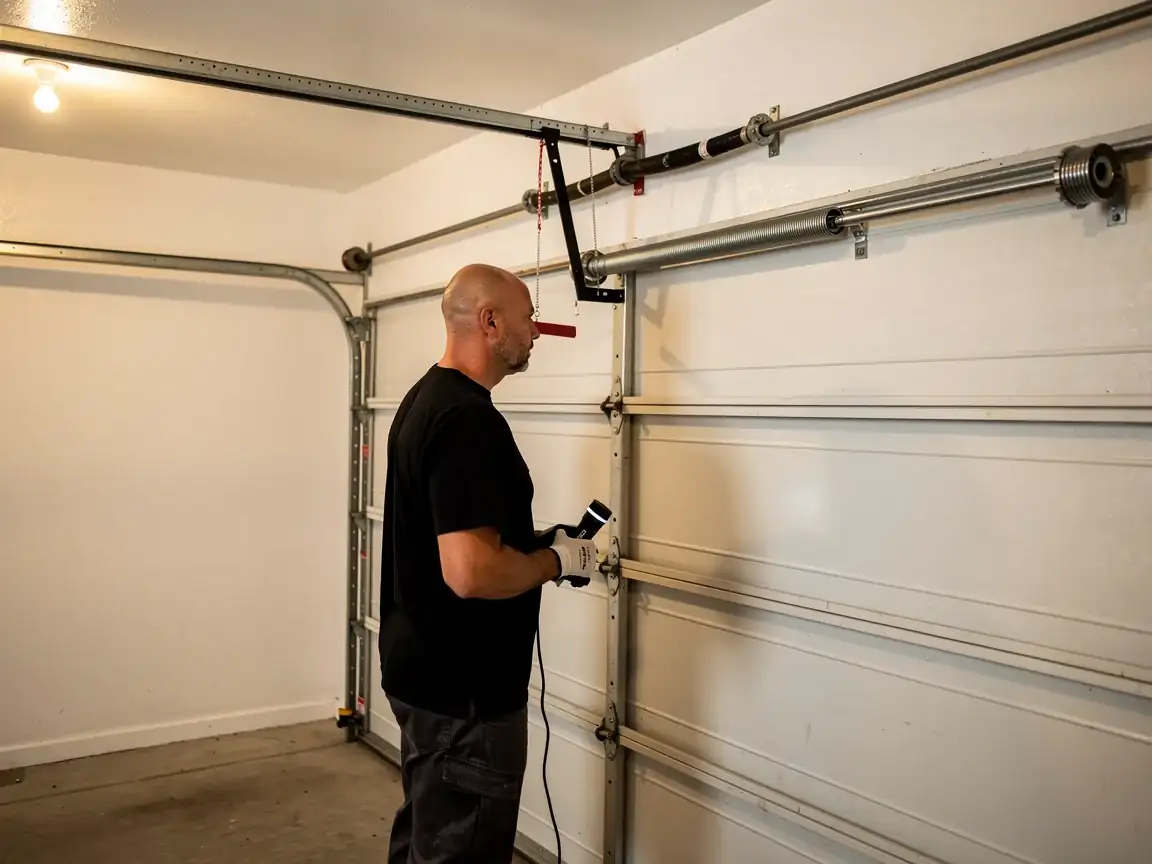
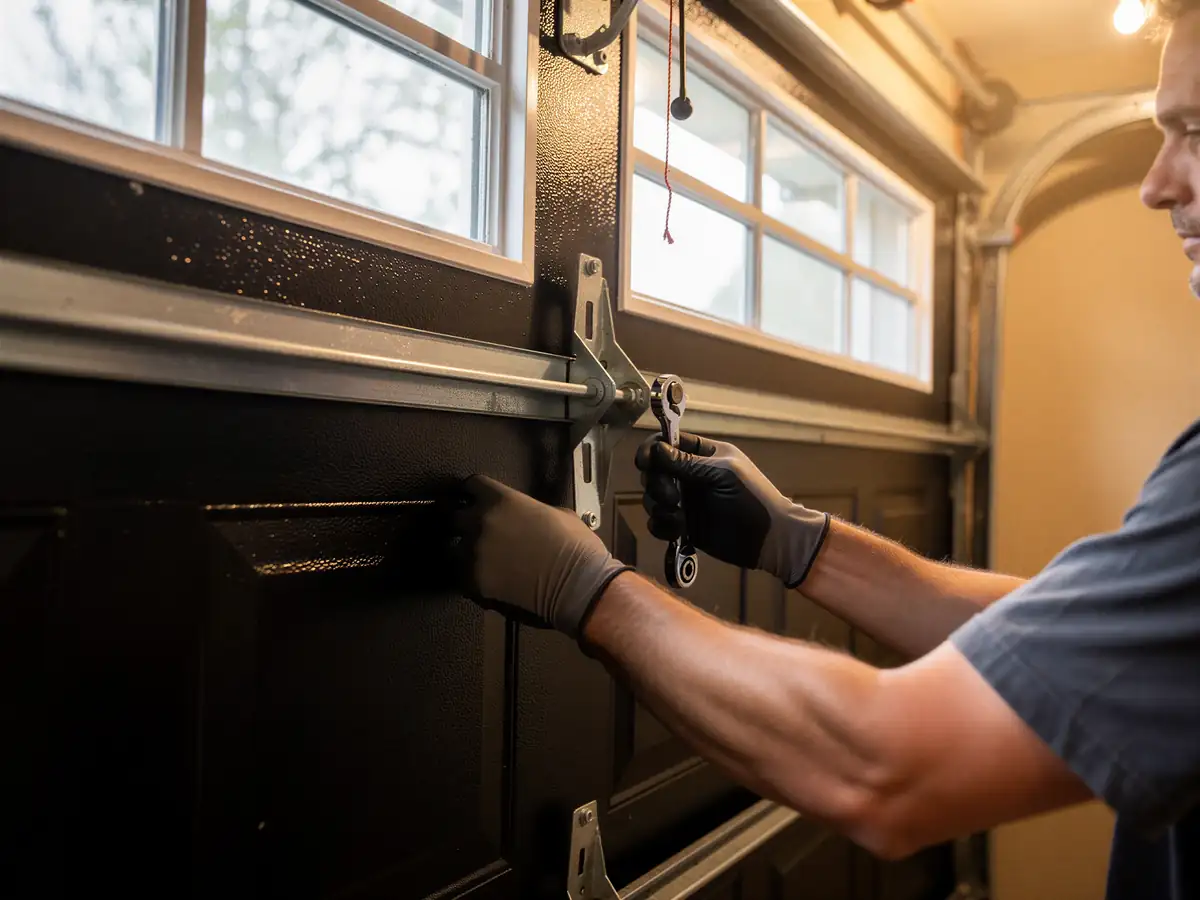
The track gauge is thinner, the spring is often sized for the original door weight before an insulated retrofit panel got bolted on at some point, and the drums and bearing plates are long out of production in that exact spec. We can repair most of it - springs, cables, rollers, openers - but every year that hardware runs, the odds rise that the next failure needs a part nobody stocks for a door that old.
The honest issue is that a repair on an original torsion system is a patch on something already past its intended service life
It'll hold, usually, but it's buying time, not resetting the clock. We'll tell you plainly when a call is a ten-minute fix and when it's the third visit on the same forty-year-old spring.
When to Get Help
Call before the door fails completely, not after. If a torsion spring on a door built to that 1960s-70s standard is showing rust streaks, a visible gap in the coil, or has snapped once already, get it looked at rather than waiting for the second break - the drum and cable on original hardware usually take damage when a spring goes, and that's a bigger job than the spring alone.
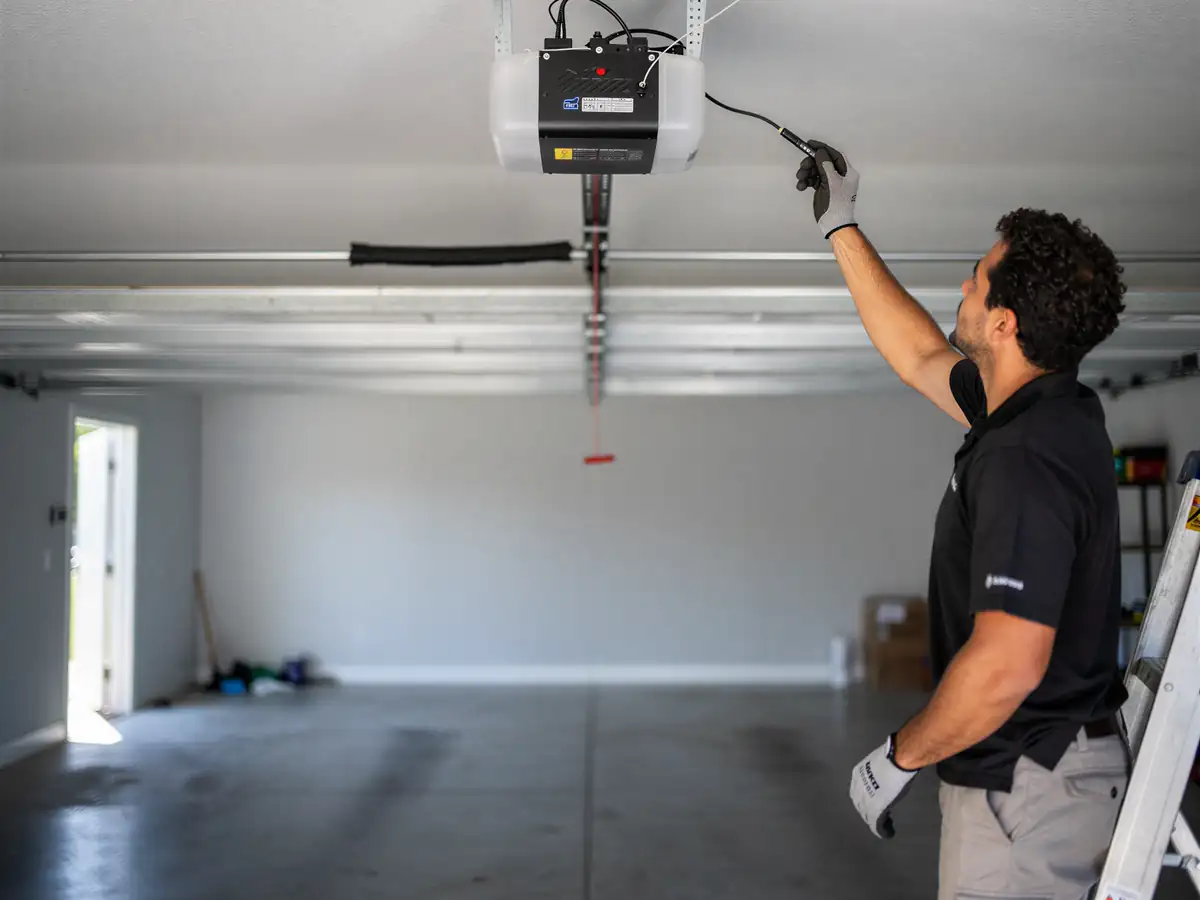
Get help immediately if the door won't stay open, if a cable has frayed, or if the opener is straining and reversing on its own. Those are safety issues, not maintenance items, regardless of how old the door is. And if you're in one of the areas close to the older tracts - the - where original hardware is more common, it's worth a look even if nothing's broken yet, just to know what you're working with.
What Most People Get Wrong
The common mistake is treating every garage door problem like a parts swap. On a door that's original to a house built around 1964, replacing one broken part often just exposes the next one - the bearing plate goes six months after the spring, then a roller, then the opener gear strips because it's been fighting worn track alignment the whole time. Each repair looks cheap in isolation. Add them up over two years and you've spent more than a new door and opener would have cost.
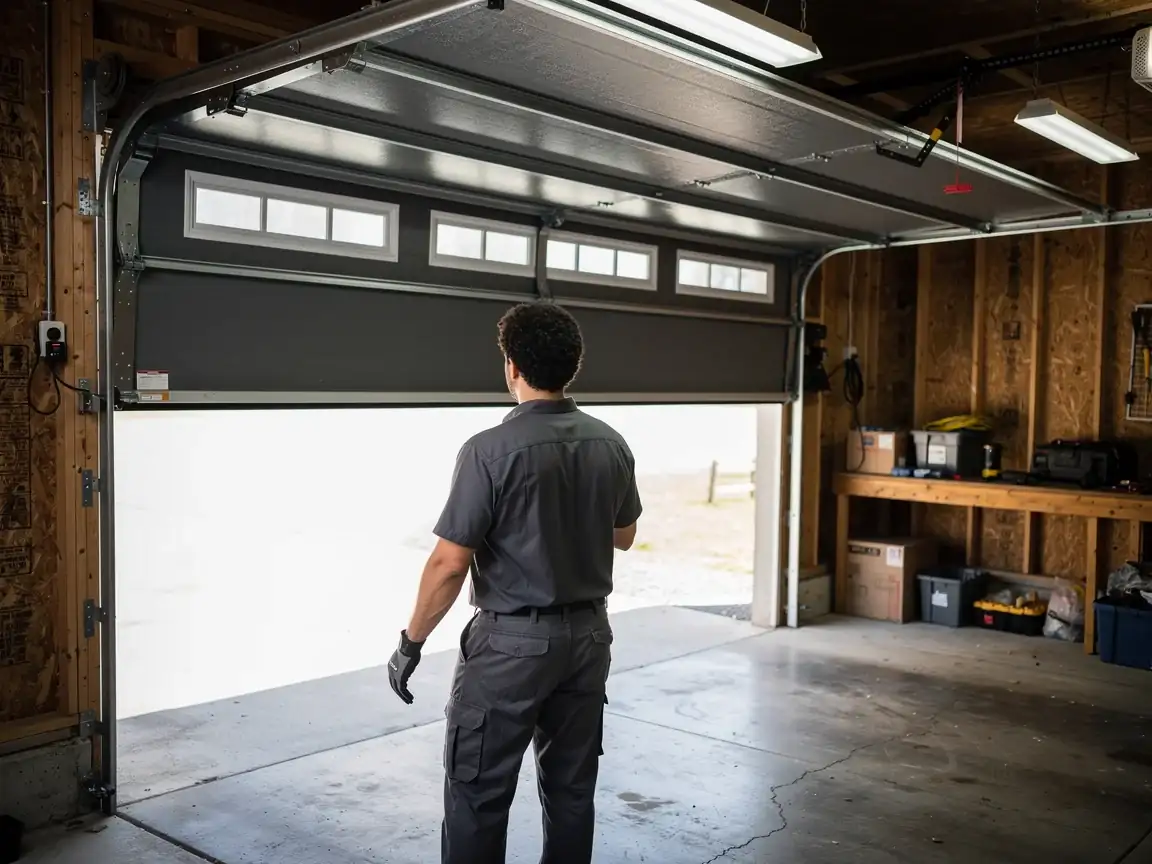
With median household income in the service area at $85,247, replacement is within reach for most owners here, which changes the math: once a door's hardware generation is multiple decades old, putting that money into a new door and opener usually beats funding a third repair visit. With 257,603 owner-occupied houses in the area, this isn't a rare call - it's one we make constantly, and the answer depends on the actual hardware in front of us, not a rule of thumb. We'll always tell you which side of that line your door is on.