Serving Long Beach, CA & nearby
(562) 581-7908
Long Beach, CA

What a Replacement Garage Door Actually Costs in Long Beach

Most Long Beach garage doors date to the 1960s and 70s. Here's what that housing stock and the mild climate mean for replacement doors and pricing today.

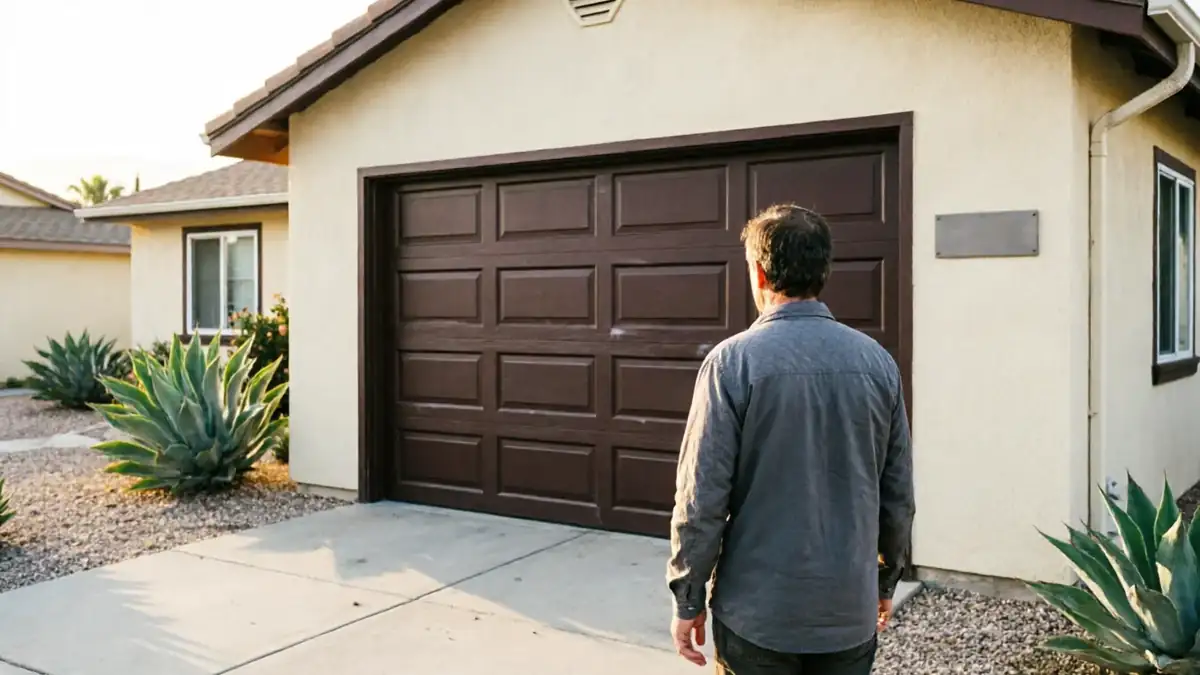
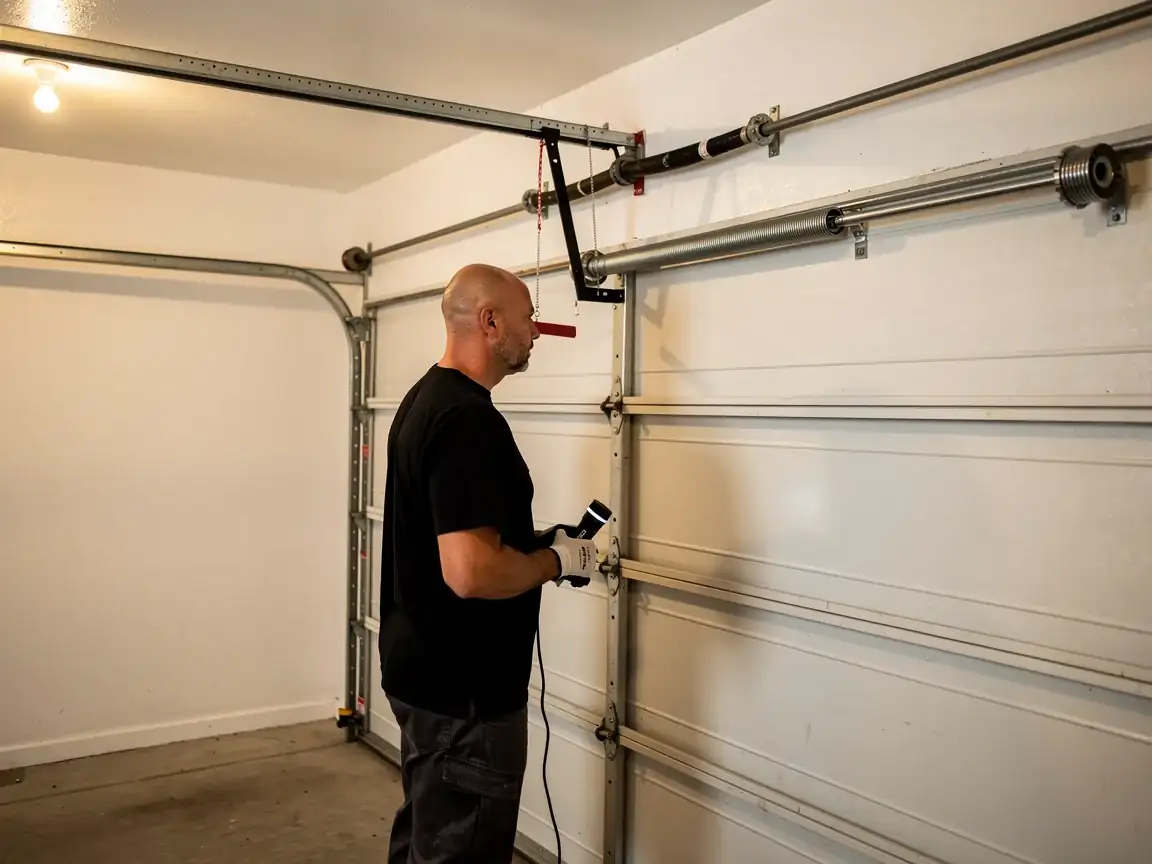
A man stands in front of a brown garage door on a stucco house.

How Local Conditions Play In

Across this service area, housing runs from 1947 to 2012, but the typical home was built in 1964, and most of the 58 named areas we work in - from a mile east of downtown to four miles north - are full of that 1960s and 70s construction. That matters when you're shopping for a replacement garage door, because the garage openings framed in that era don't always match the stock sizes carried by big-box stores today. The climate here is mild temperate, which is good news on one front - you're not fighting the freeze-thaw cracking that ruins doors in colder regions - but it also means a lot of original doors have simply aged out on schedule rather than failed from weather damage. A door installed when a tract home went up in the 1960s has had sixty-odd years of daily cycling, springs stretching and shrinking in the same mild range every day, with no extreme swings to blame. If you're in one of the newer pockets built closer to 2012, your opening and hardware are a different animal, and a straight swap is usually simpler.

The Problem

The core issue is mismatch. A 1964-era single-car garage in a neighborhood like was framed for a door width that isn't always what's sold as a standard size now. Owners measure the opening, order a door online or off a showroom floor, and find the jamb or header doesn't line up with the new unit's track hardware. Older torsion or extension spring setups in this housing stock were sized for lighter wood-panel doors, not the steel and insulated doors sold today, so swapping the door without touching the spring system usually leaves you with a door that's either too heavy for the old springs or binds on worn track that was never replaced. Because the climate is mild, a lot of these old doors look fine on the outside, so the whole system gets ignored until something actually breaks. We see it most in the older, denser pockets - - where houses sit closer together and garages tend to be smaller and more original than in later-built tracts. The fix isn't just picking a nicer-looking door. It's matching the door to the opening, the opener, and the spring setup the house actually has, which for a lot of this area's stock means parts and dimensions nobody keeps on a shelf.

When to Get Help

If your door is original to a house built anywhere near that 1964 median, get it looked at before you buy anything. A new door ordered against the wrong opening measurement is a bigger problem than an old door that still works. Get help when the opening is out of square - common once a house passes 50 or 60 years - when the track shows rust pitting or wear grooves that don't match a new door's roller size, or when the existing springs are original and you don't know their cycle count. Given the area's income profile, a lot of owners could buy almost any door on the market; the harder call is picking the right one for a house this age rather than the showroom favorite. If you're in one of the newer builds closer to Stanton, Cypress, or the 2012 end of the housing range, the call is simpler and a standard replacement usually goes in without surprises.

What Most People Get Wrong

The biggest mistake is assuming insulation value matters here the way it does elsewhere. With a mild temperate climate, the R-value sales pitch that makes sense in a place with real winters doesn't carry the same weight, and paying extra for heavy insulation on a single-car garage in this service area is often money spent on a feature the climate doesn't ask for. The second mistake is sizing: people measure the visible opening and skip measuring headroom and side room, which is where 1960s construction gets tight. Third, with median household income here at $85,247 and most of the service area's roughly 257,603 owner-occupied houses sitting in this same older stock, a lot of buyers assume the price they saw at a chain store already accounts for correcting an old opening or swapping worn springs - it usually doesn't. We'll say plainly: if your springs and track are original to a house from the 1960s, don't expect us to just bolt a new door onto them and call it done. That's a repair that needs doing at the same time, not an upsell.
How it works

From “it’s stuck” to “it’s fixed”

A quick, honest process - no guesswork and no surprises, start to finish.

  1. 1
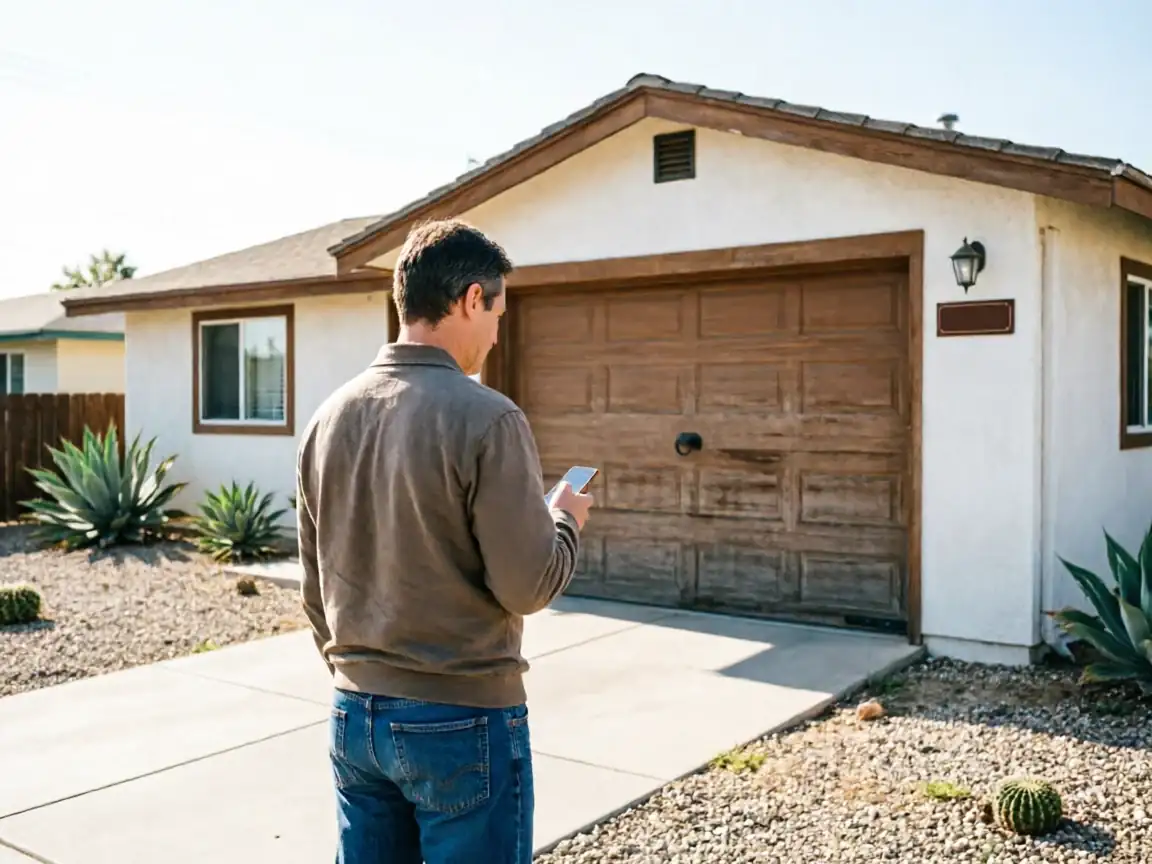
    A man stands in a driveway looking at his phone in front of a garage door.

    Tell us what’s wrong

    Describe the symptom - won’t open, loud bang, opener runs but the door won’t move.

  2. 2
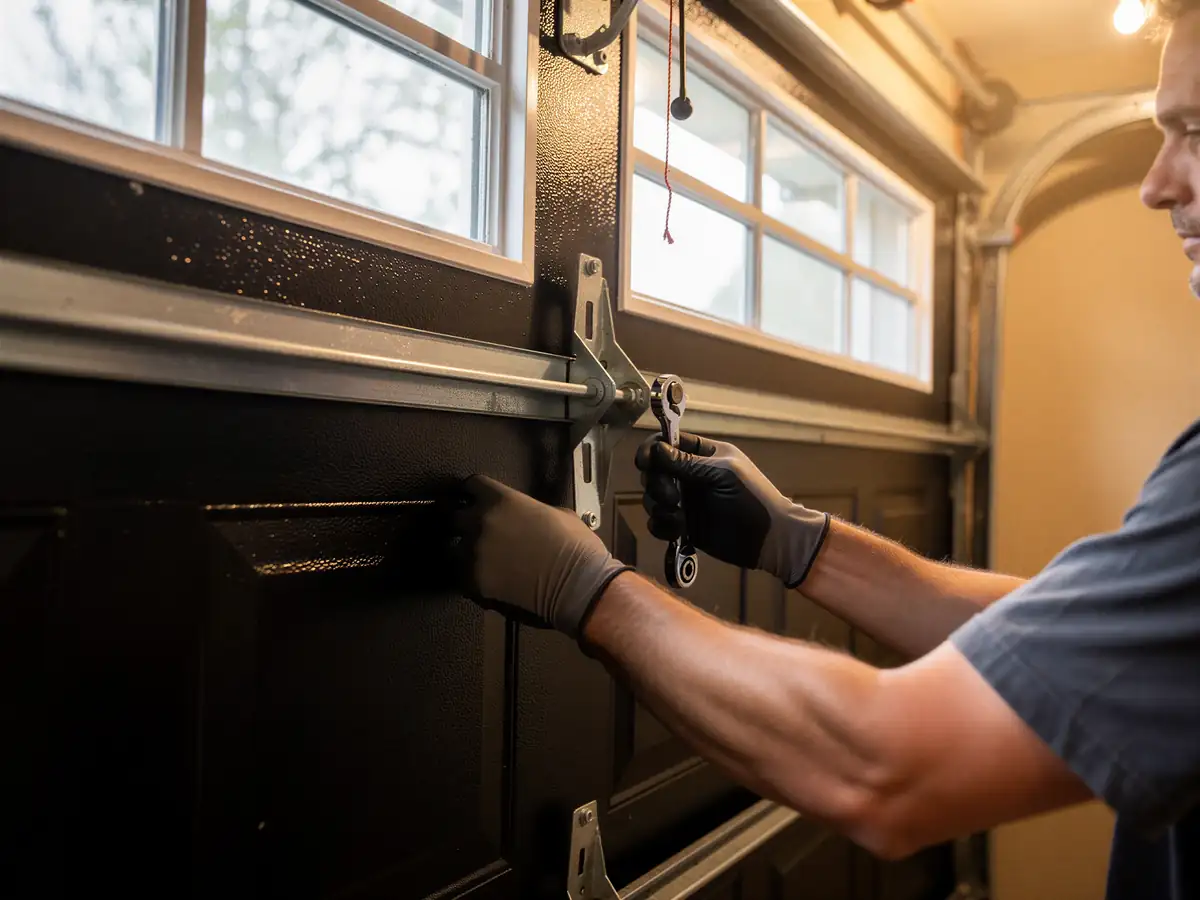
    A technician works on a white garage door with visible springs and tracks.

    On-site diagnosis

    A technician tests the door under power and by hand and finds what actually failed.

  3. 3
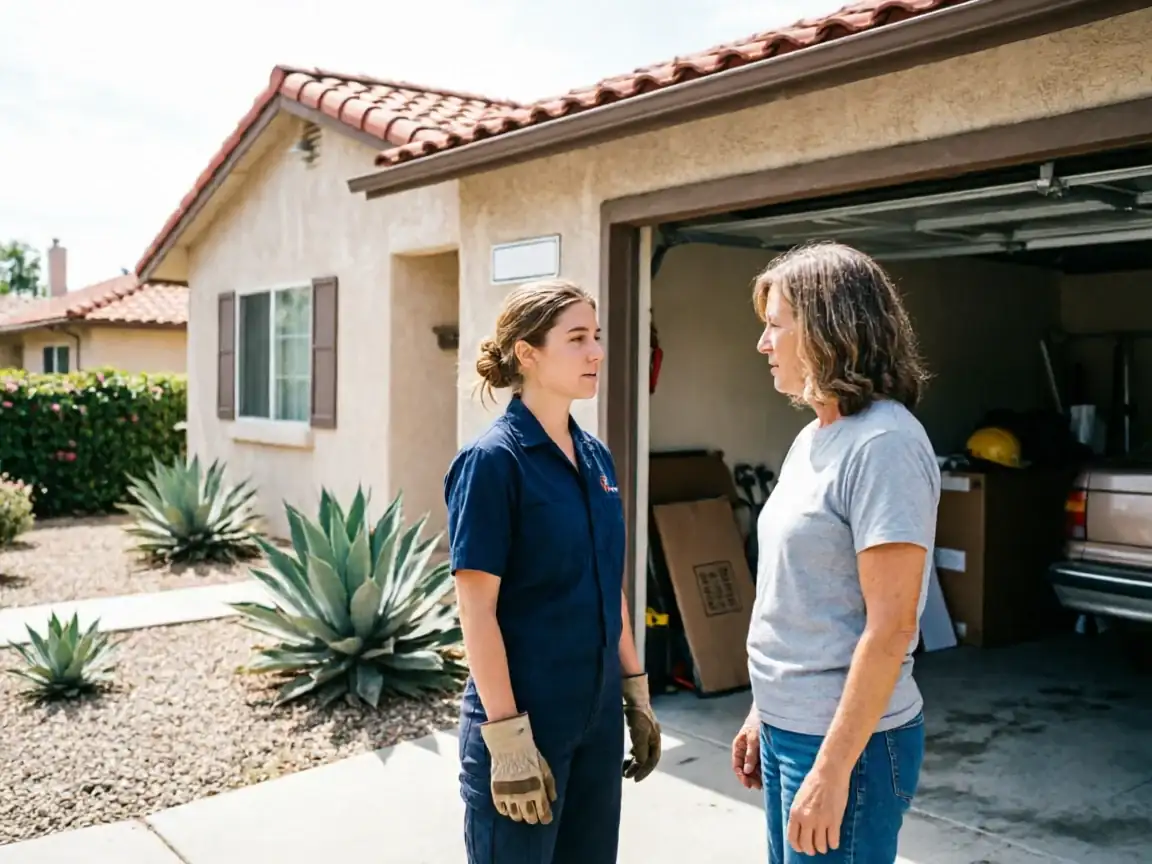
    A technician in a blue uniform talks to a woman in front of a garage.

    Clear, up-front plan

    You get the fix that’s needed and what drives the cost - before any work starts.

  4. 4
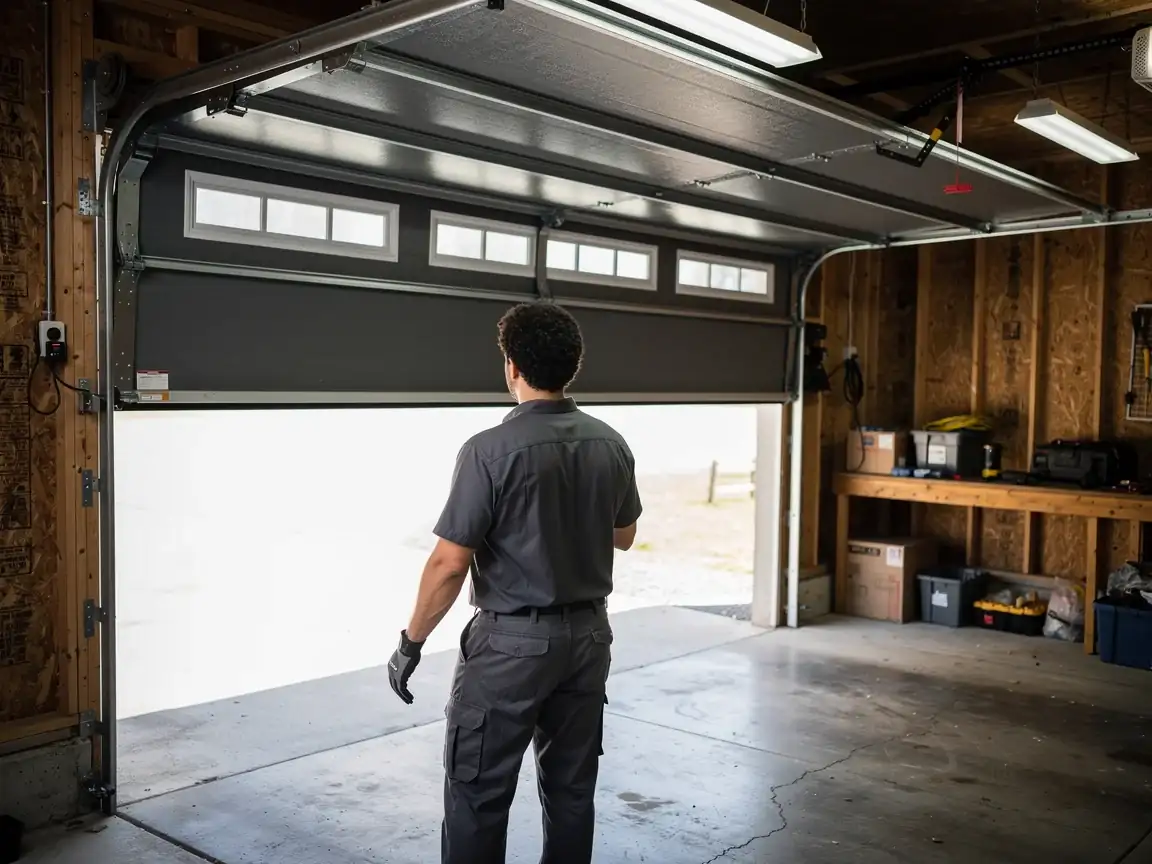
    A technician stands in a garage looking at a partially open garage door.

    Repaired & tested

    The repair is done, the door is set true and tested, and the work area left clean.

Not sure which repair your door needs in Long Beach, CA? Describe what it’s doing - every job starts with a diagnosis.

How we work

What to expect

Diagnosis firstEvery visit starts by finding what actually failed - not a pre-written parts list.
The right part for the doorSprings and openers matched to the door’s weight and age, so the fix holds up.
Straight answersWhen a repair makes more sense than a replacement - or the reverse - you hear it plainly.
Clean, careful workTension released safely, hardware set true, the door tested under power before we leave.
Questions

Frequently asked

Straight answers about garage door repair in Long Beach. Still unsure? Ask us directly.

Will a standard-size replacement door fit my garage?

Not always. A lot of this area's garages were framed in the 1960s and 70s, before today's common door widths were standard, so the opening on an older house doesn't always match an off-the-shelf size. Measure the full opening, not just the door itself, before you order anything.

Do I need an insulated door given the climate here?

Probably not a heavy one. The climate band here is mild temperate, so the insulation upgrades that pay off in colder regions usually don't carry the same value on a single-car garage in this service area. It's worth asking what you're actually paying for before adding it.

How do I know if my springs need replacing along with the door?

If the springs are original to a house built around the 1960s median for this area, treat them as due. Putting a new, heavier insulated door on old torsion or extension springs sized for a lighter wood-panel door is a mismatch that shows up fast.

Does my neighborhood affect what door I need?

Yes. Older, denser pockets closer to downtown tend to have smaller, more original garages with tighter headroom, while areas built closer to the 2012 end of the housing range usually have openings sized for modern standard doors and a simpler swap.

Ready to get your garage door sorted?

Tell us what it’s doing and where you are in Long Beach - we’ll take it from there.

Request a QuoteCall