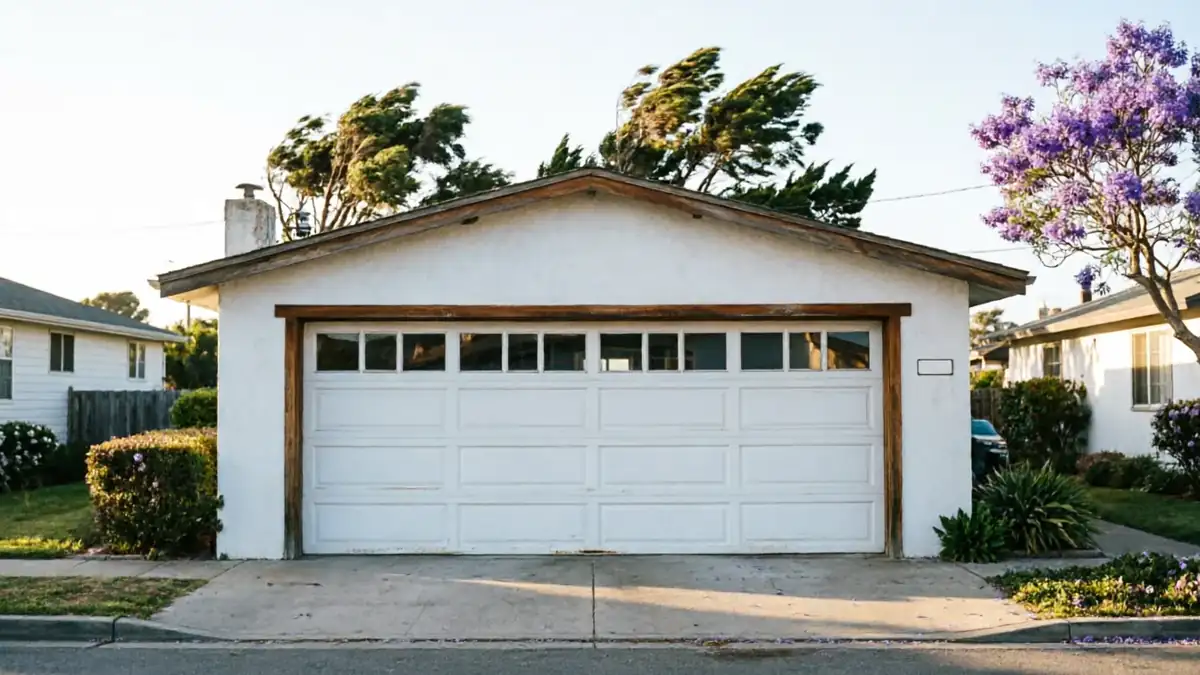
How Local Conditions Play In
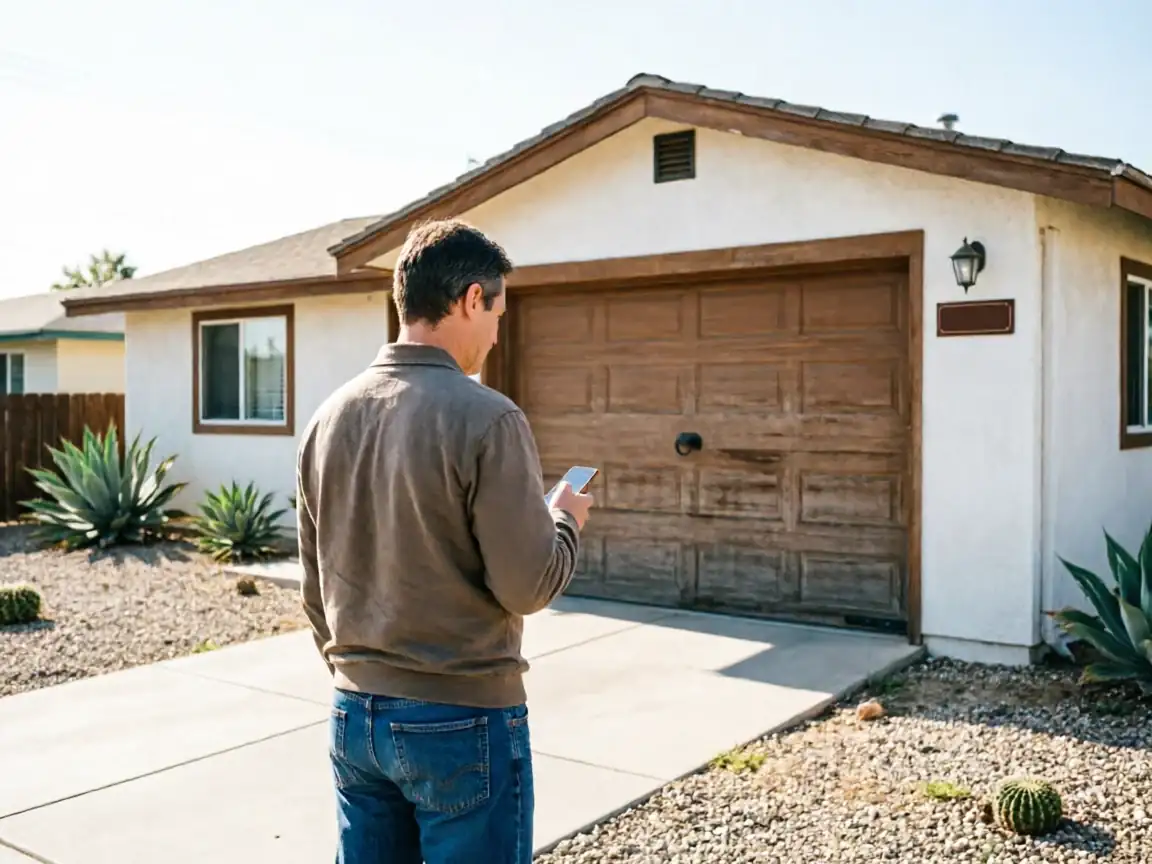
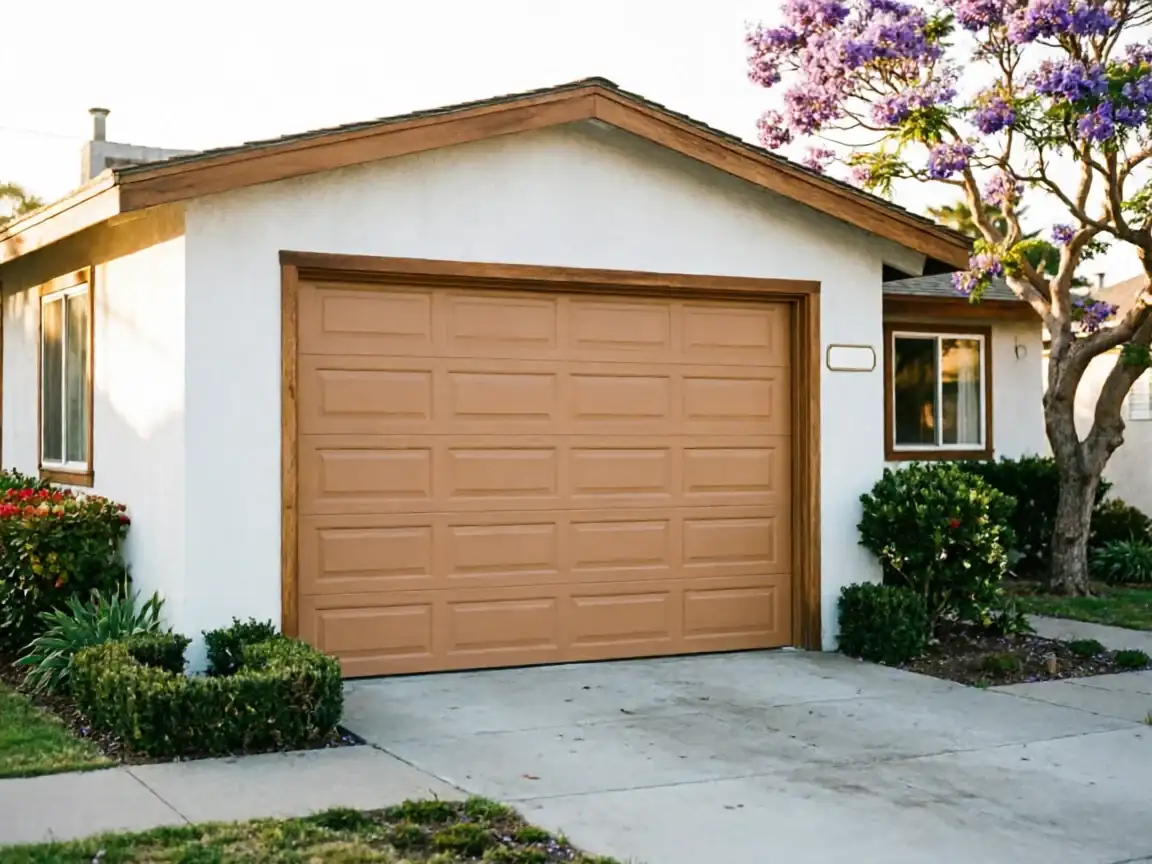
Most of the houses on this side of town went up between 1947 and 2012, with the bulk of that stock dating to 1964 - right in the middle of the big 1960s and '70s building push that filled out all 58 named areas here, from down through the. A lot of those garages still carry the double-wide door that came with the original build: one wide panel, sometimes 16 feet across, hung on hardware sized for the load tables of fifty years ago, not today's.
The climate band here is mild temperate, which cuts both ways. You don't get freeze-thaw cycles that crack concrete or swell wood jambs, so the door itself usually looks fine for decades. But a wide single-panel door doesn't need frost to fail - it needs wind. And because nothing here forces an owner to think about wind the way snow load forces someone in a colder region to think about their roof, a lot of these original doors go thirty or forty years without anyone checking whether the track brackets can still hold under a gust. The housing age and the door width are the two things working against each other, and neither shows up until the wind actually pushes on the panel.
The Problem
A wide door presents a lot of surface area, and wind doesn't push evenly across it
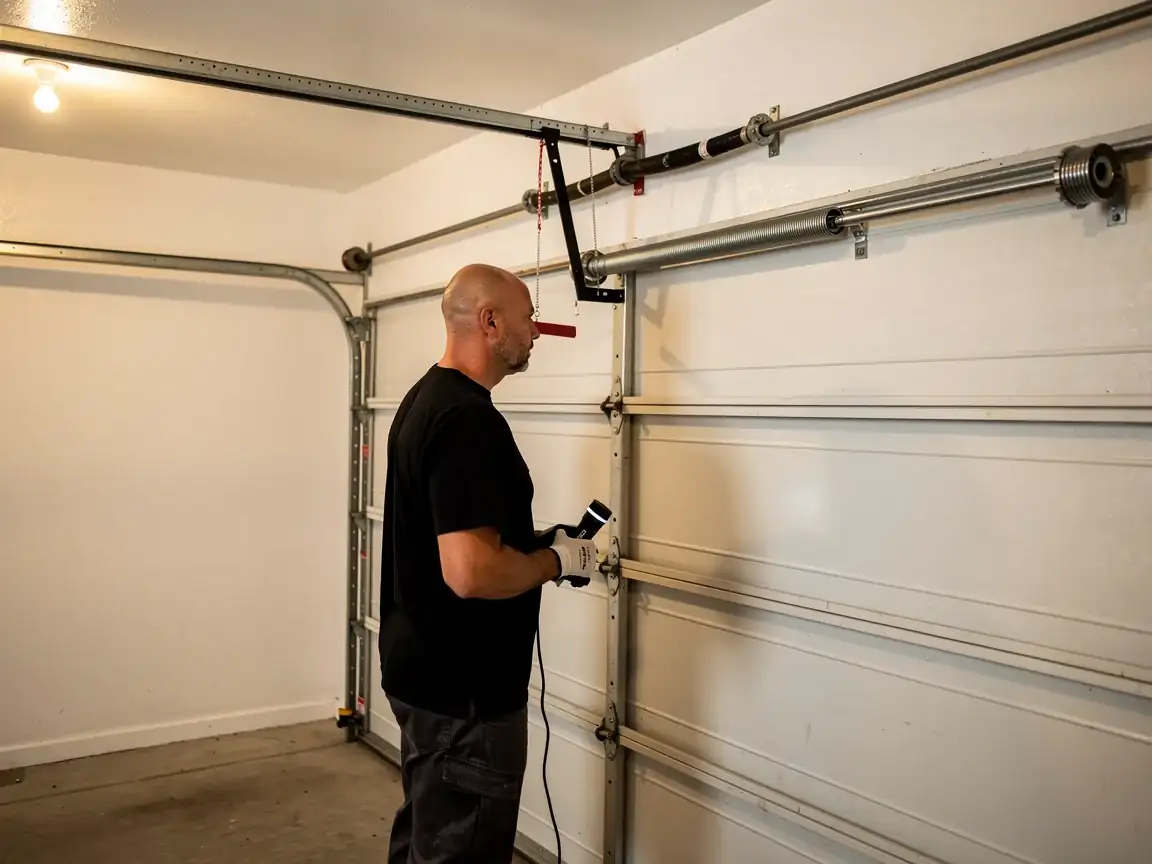
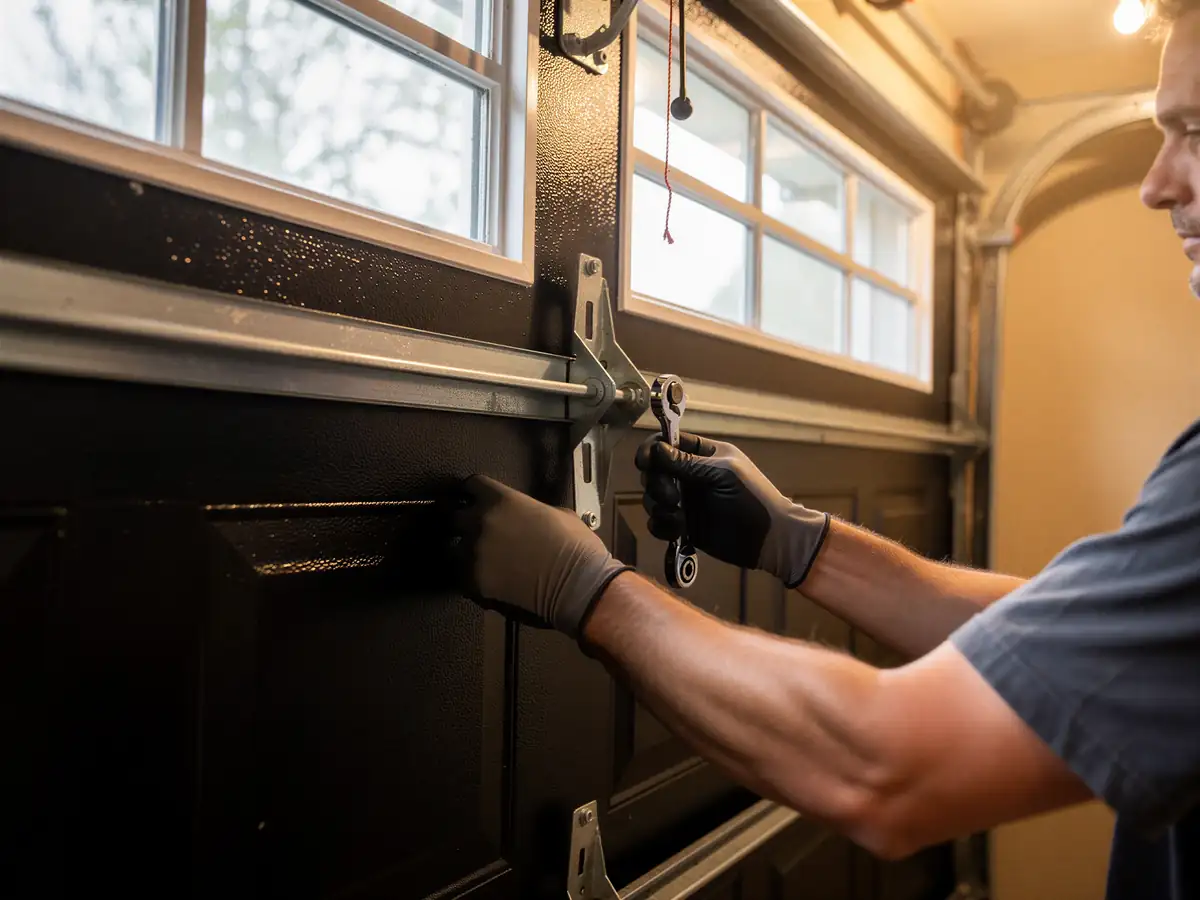
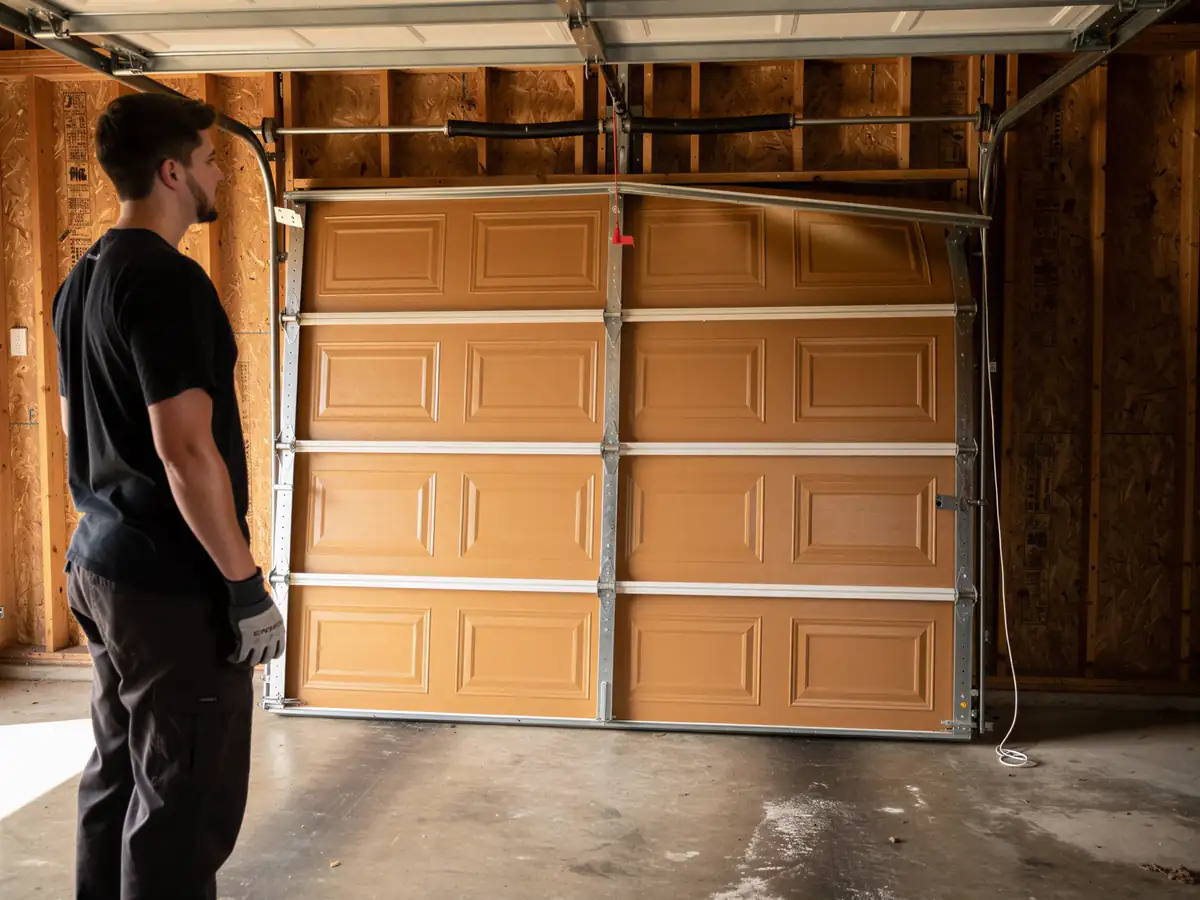
Gusts load one side harder than the other, and a single 16-foot panel flexes in the middle in a way a pair of narrower 9-foot doors doesn't. On the original hardware common in the 1960s and '70s stock here, that flex works the end stiles loose from the track, bends the horizontal reinforcing strut if there even is one, and pulls the vertical track brackets away from the framing a little more each time.
You usually don't see it happen
What you see, weeks or months later, is a door that binds on one side, an opener that strains and reverses partway through a cycle, or a visible bow across the panel when the door is down. Sometimes a track bracket pulls far enough that the roller jumps the track entirely on the next closing. None of this is sudden collapse - it's cumulative give in hardware that was never rated for repeated lateral load on a panel that wide.
We don't have wind speed data for this area, so we won't tell you a number
What we can tell you is that the door most likely to show this kind of wear is the widest, oldest, least-reinforced one on the block - and there are plenty of those here.
When to Get Help
Call if the door bows visibly across the middle when it's closed and the wind has been up, even if it closes and opens fine otherwise. A bow that disappears when the wind drops but comes back every time it's windy means the panel is flexing past where it should, and that's a structural fix, not a lubrication job.
Also call if you see daylight or a gap between a track bracket and the wall where there wasn't one before, or if the door has started closing unevenly - one side touching down before the other. That's the track pulling away from true, and it gets worse with every cycle, not better.
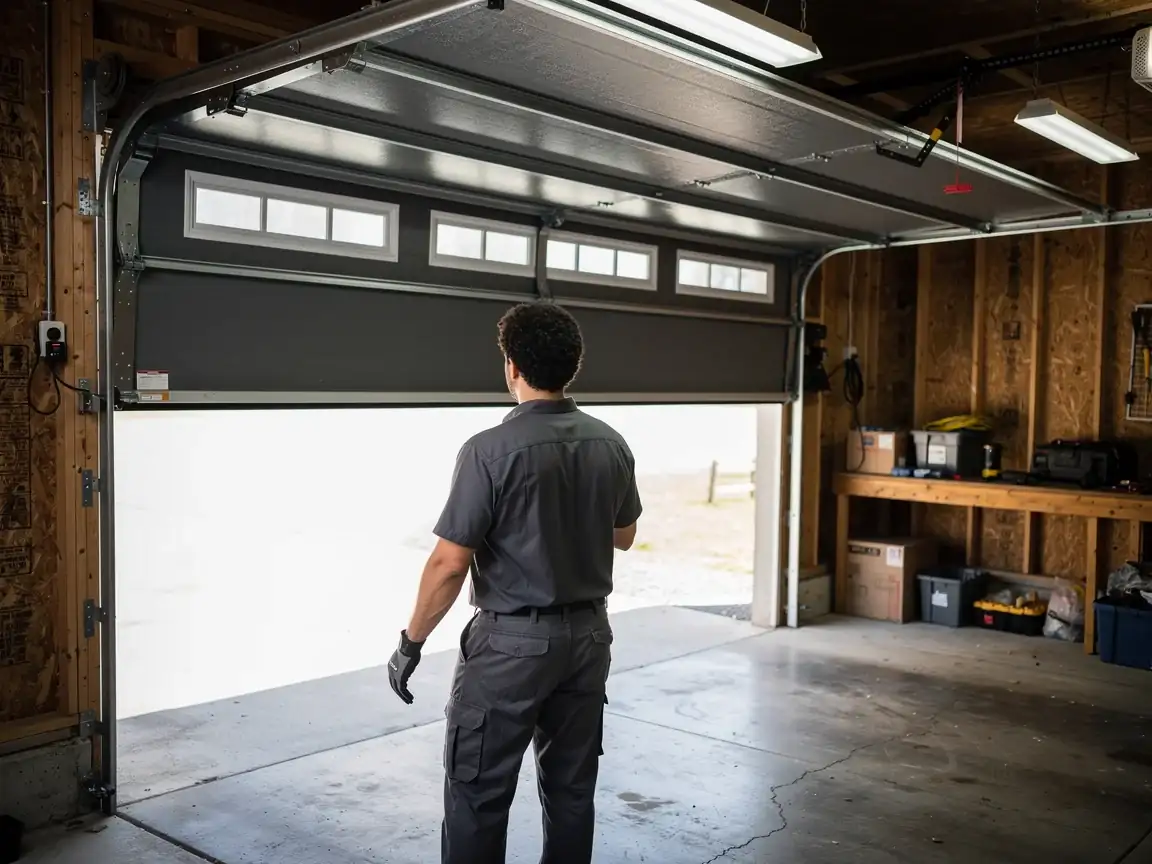
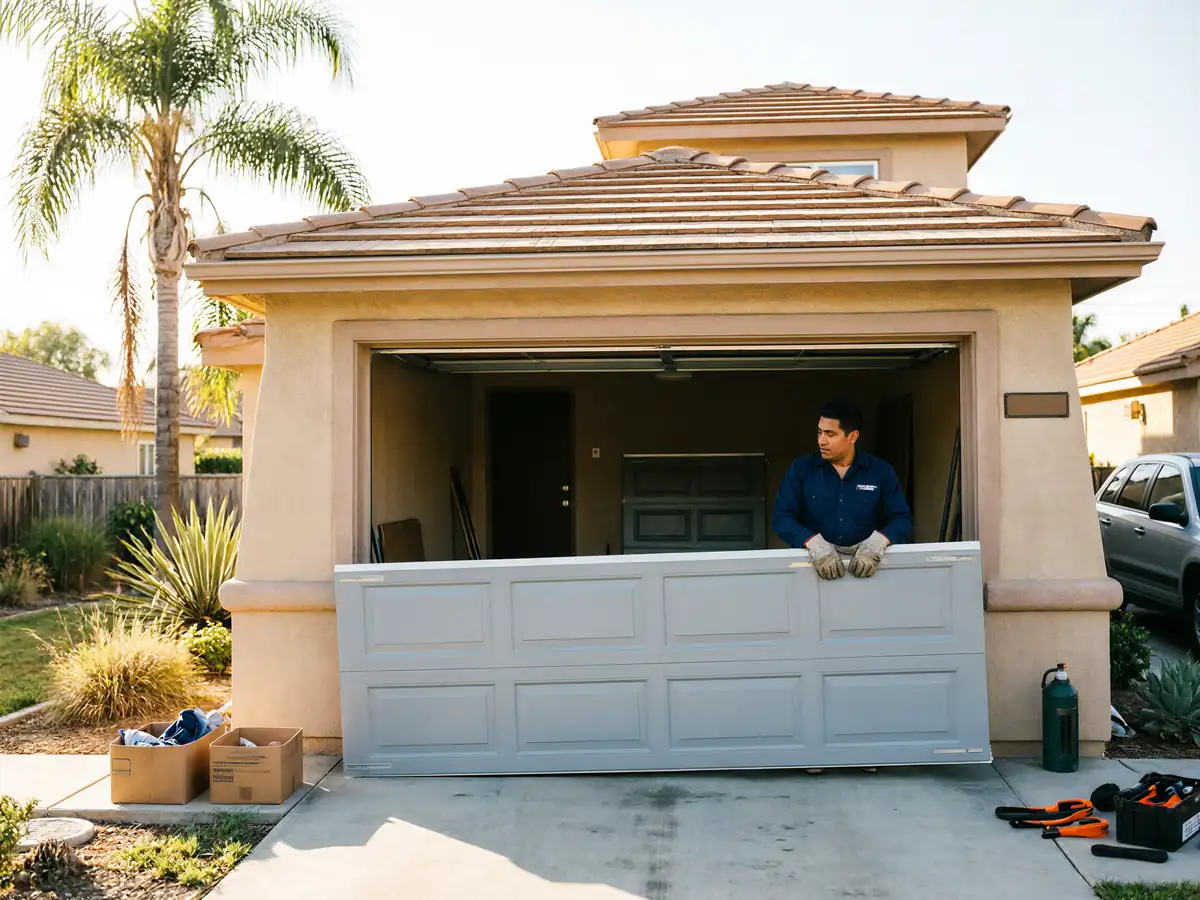
If the opener strains, reverses, or you hear a new grinding sound specifically after a windy stretch, don't run it again until someone's looked at the track and the end stiles. A double-wide door with damaged end hardware can come off the track, and that's not a repair you want to discover mid-cycle with the car underneath it.
What Most People Get Wrong
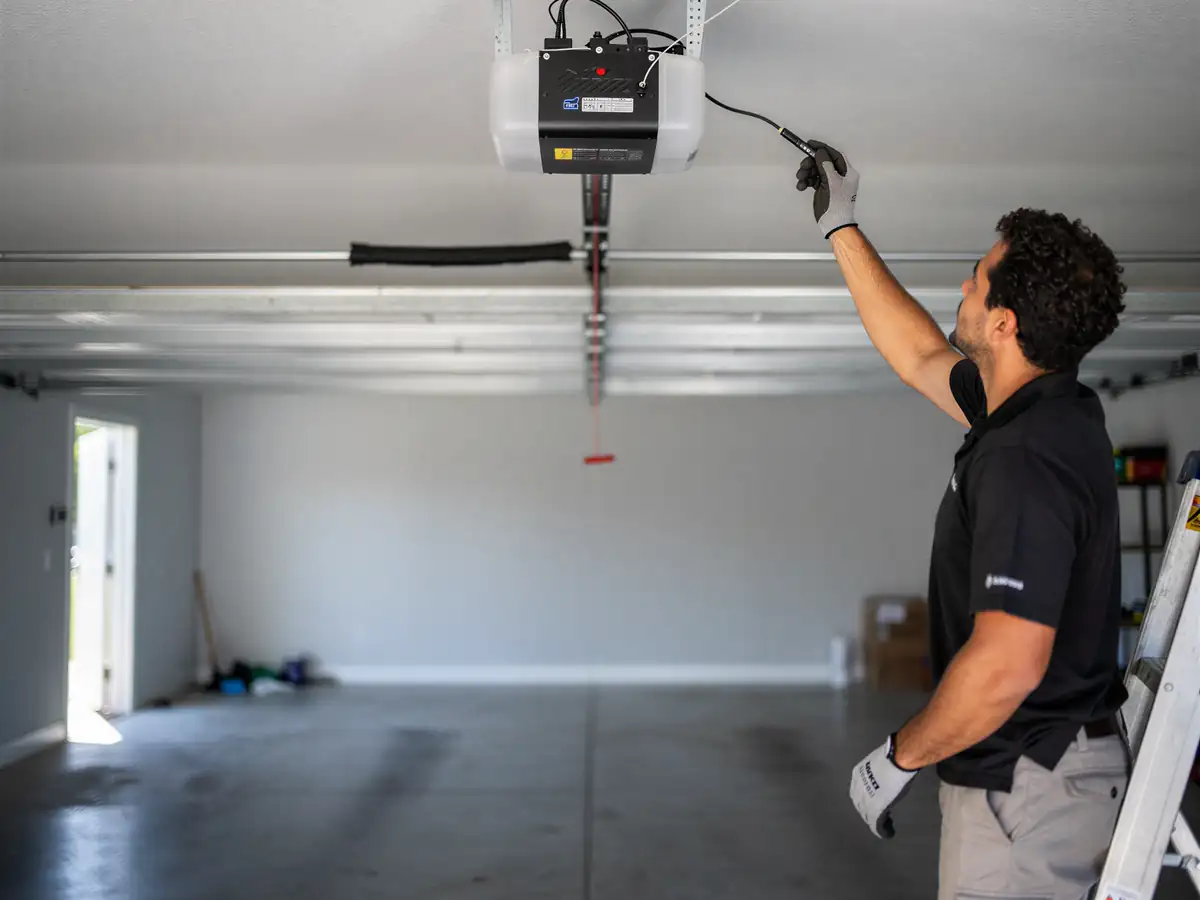
The most common mistake is assuming a stronger opener fixes a door that's struggling in the wind. It doesn't - the opener isn't what's taking the load, the track and the panel are. A bigger motor just pushes harder against hardware that's already bending.
The second mistake is treating wind damage as a one-time event tied to one bad day. On a wide original-era door, it's almost always cumulative: a little give at the bracket this year, a little more next year, until the roller finally jumps. By the time it's obvious, the fix usually isn't a strut you bolt on - it's new track hardware at minimum, and sometimes the whole panel.
Here's the honest limit: we can reinforce a sound door with a horizontal strut and tighter brackets, and that helps a lot of these original 1960s and '70s doors hold up better. But if the panel itself is already bowed or the end stiles have pulled loose more than once, reinforcing it is a patch, not a fix - replacement is the better money at that point, and we'll tell you that straight rather than keep bolting on brackets.