Serving Long Beach, CA & nearby
(562) 581-7908
Long Beach, CA

Opener Installation for Lakewood's 1957-Era Garages

Lakewood homes date mostly to 1957, and most garages still run on openers never matched to the original door weight. We install and reinforce from Long Beach, 5 miles out.

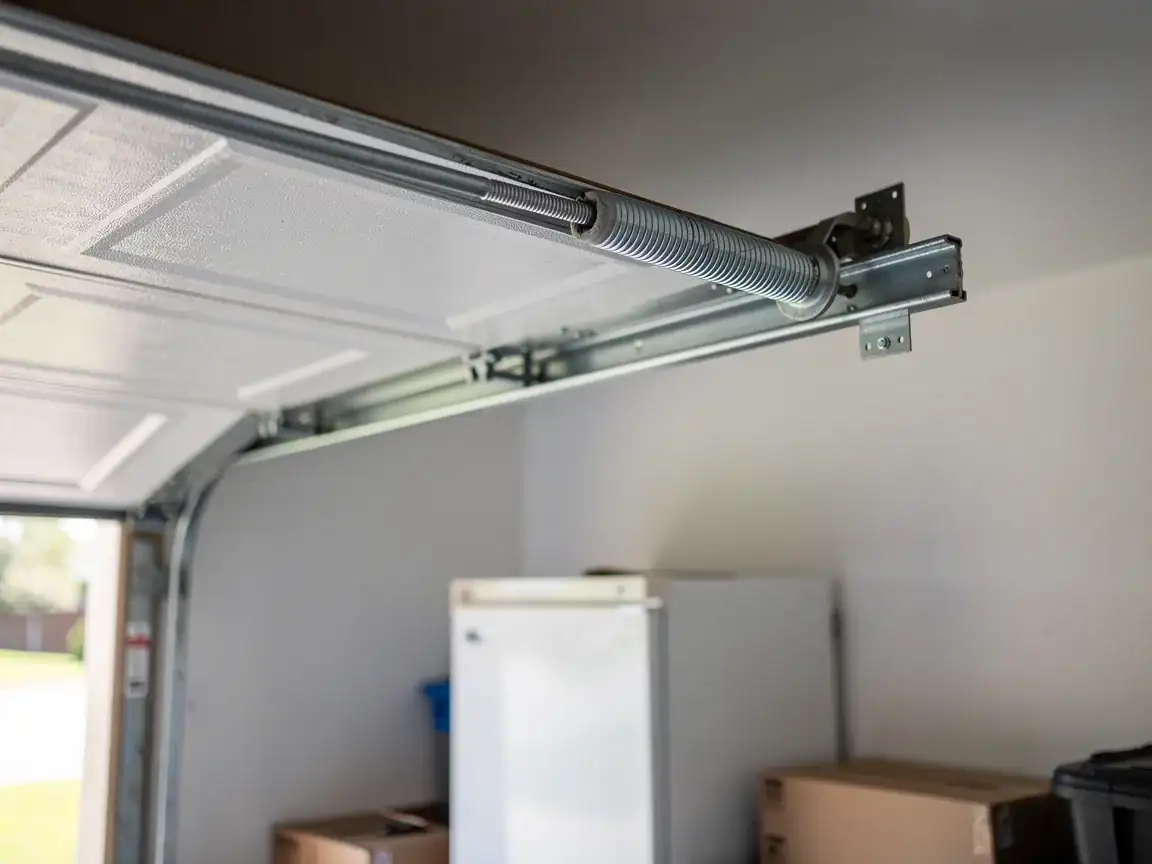
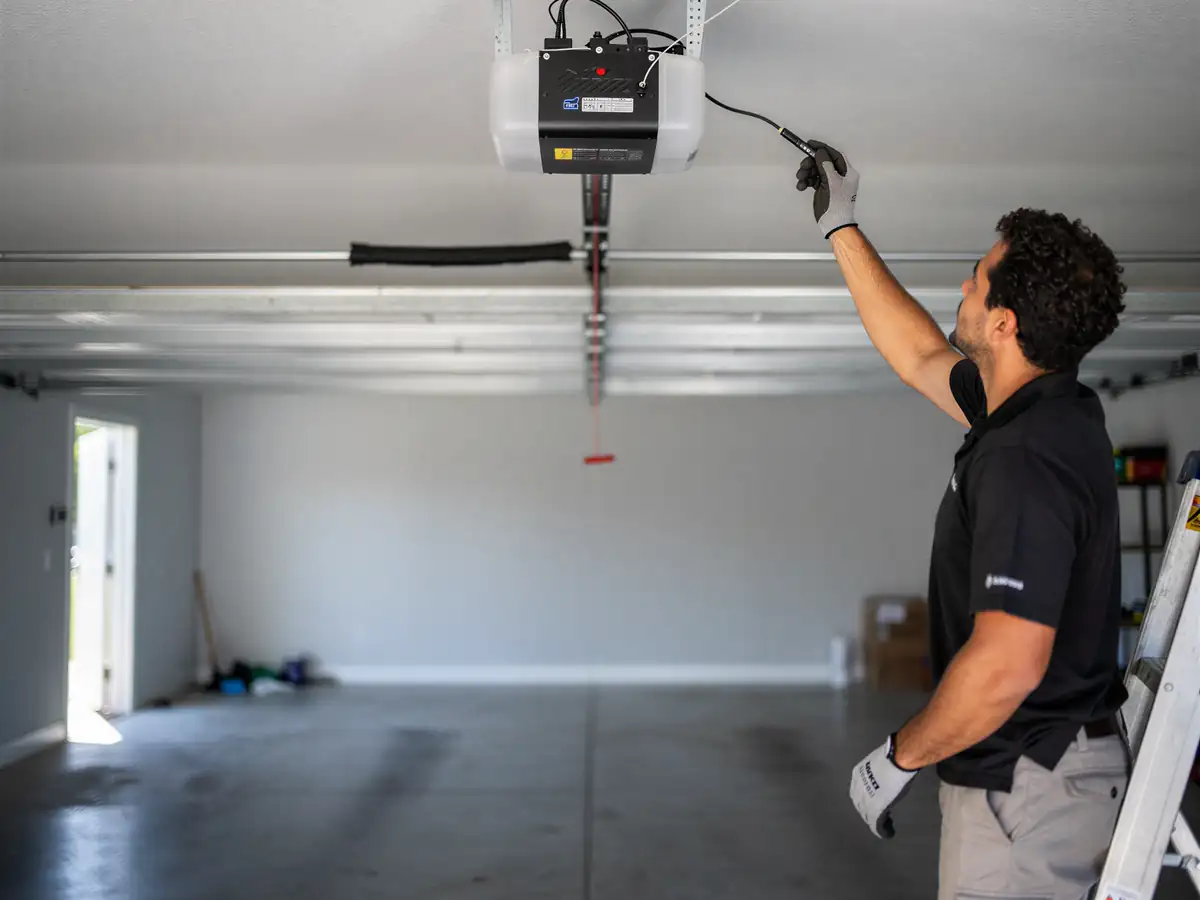
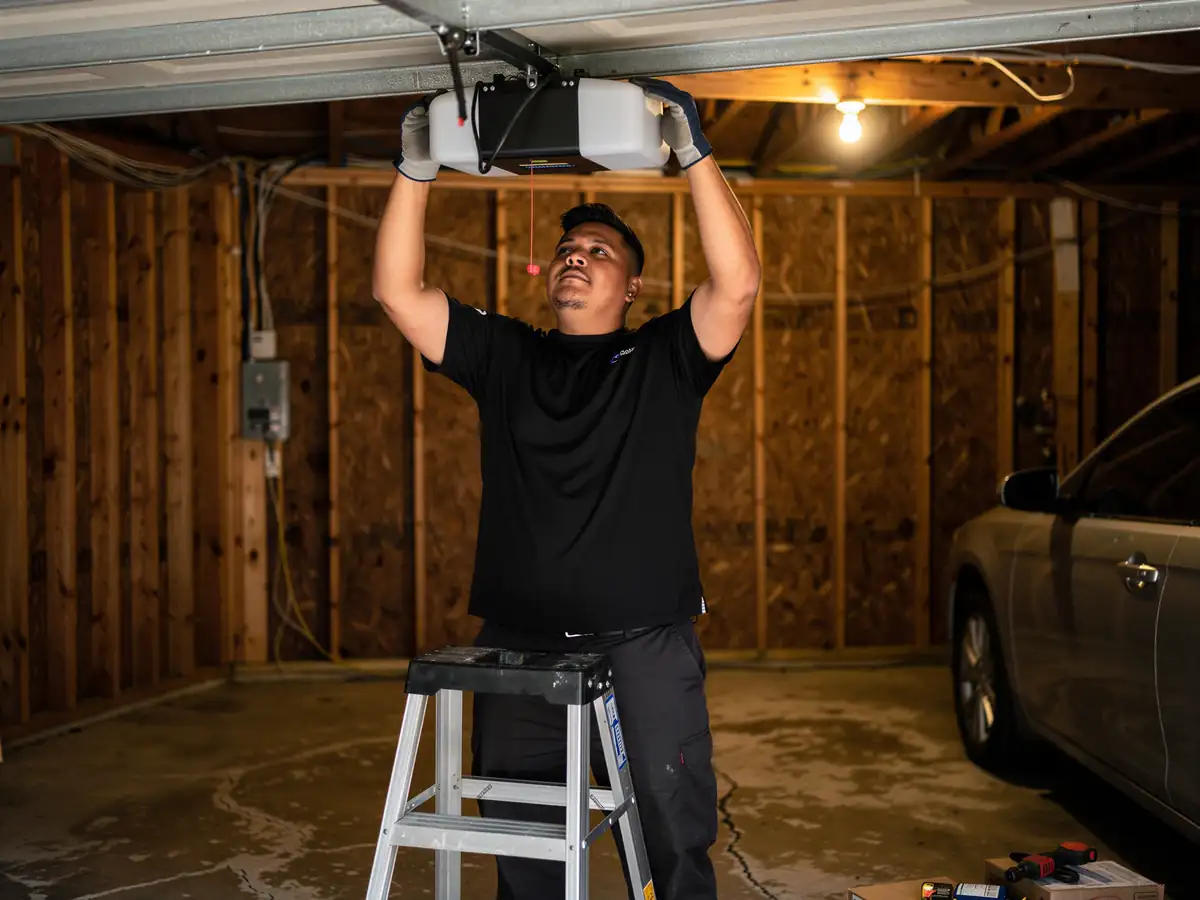
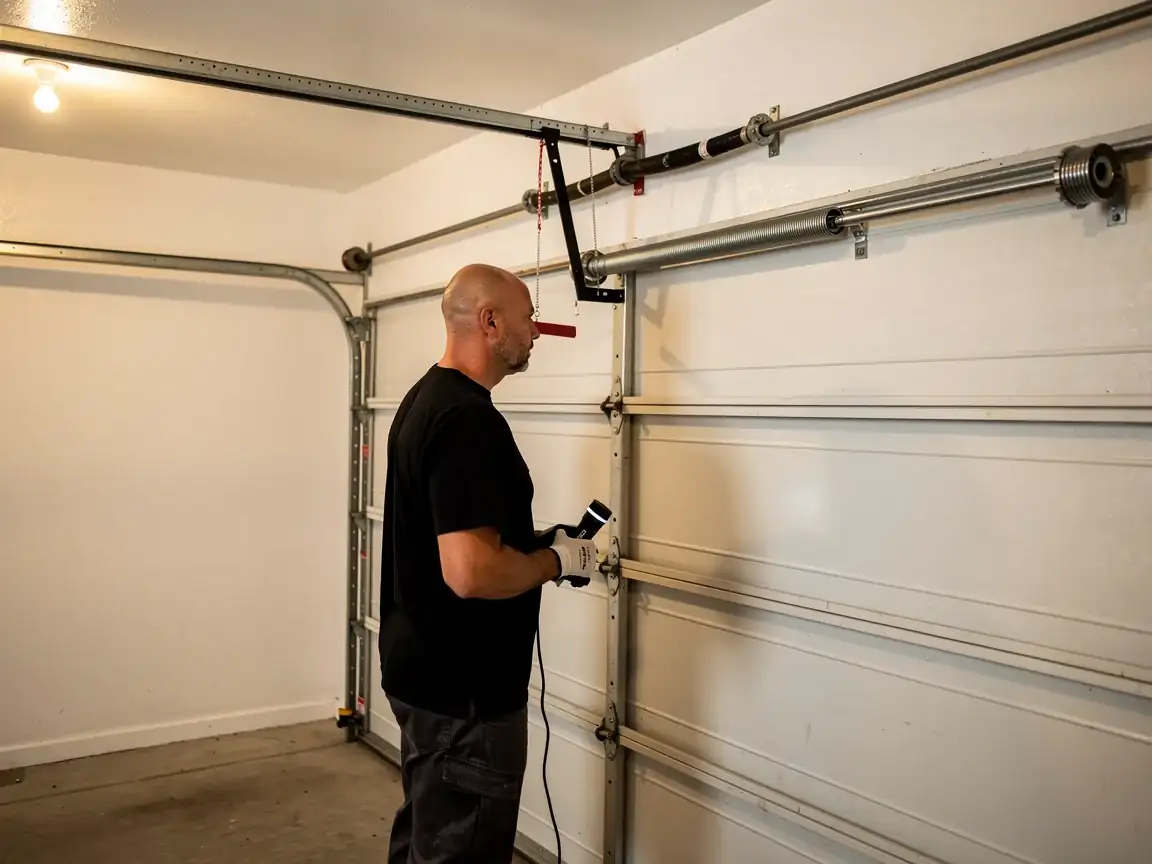
A technician on a ladder installs a garage door opener in a garage.
Long Beach, CA
7 services
7 service areas
Diagnosis first, then the fix

How Long It Takes

A straight swap on a door that already has a working opener bracket and reinforced top panel is usually a half-day job once we're on site. Lakewood complicates that more often than you'd think. Houses here cluster around a 1957 build date, and a lot of those garages picked up their first automatic opener well after the house went up - sometimes decades later, bolted onto a door frame that was never built to carry one. When we find that, we're not just hanging a new motor head. We're adding a reinforcement strut to the top section, checking the track alignment against a door that may have sagged slightly over sixty-plus years, and making sure the whole assembly can actually take the pull of a modern opener without racking. That adds time. We'd rather tell you that up front than rush it and have the bracket pull loose in a year. If the door itself is original hardware with a pitted track, we flag that separately - opener installation and door repair are not the same call, even though they land on the same visit.

The Symptom

The calls we get from Lakewood tend to follow the same pattern. The opener runs, the chain or belt moves, but the door shudders, reverses partway up, or closes unevenly on one side. Homeowners assume the motor is failing. Often it isn't. On a house built around 1957, the garage door itself was likely never engineered with an opener in mind - many of these were manual doors retrofitted once automatic openers became common, and the top panel was never reinforced to spread the opener's pulling force evenly across the door. Put a modern opener on an unreinforced panel and you get exactly this: a motor working fine but a door flexing and binding under its own pull. A second, quieter symptom shows up as a louder-than-normal opener on an otherwise quiet system - a sign the opener is fighting resistance in the door or track rather than lifting cleanly.

How We Fix It

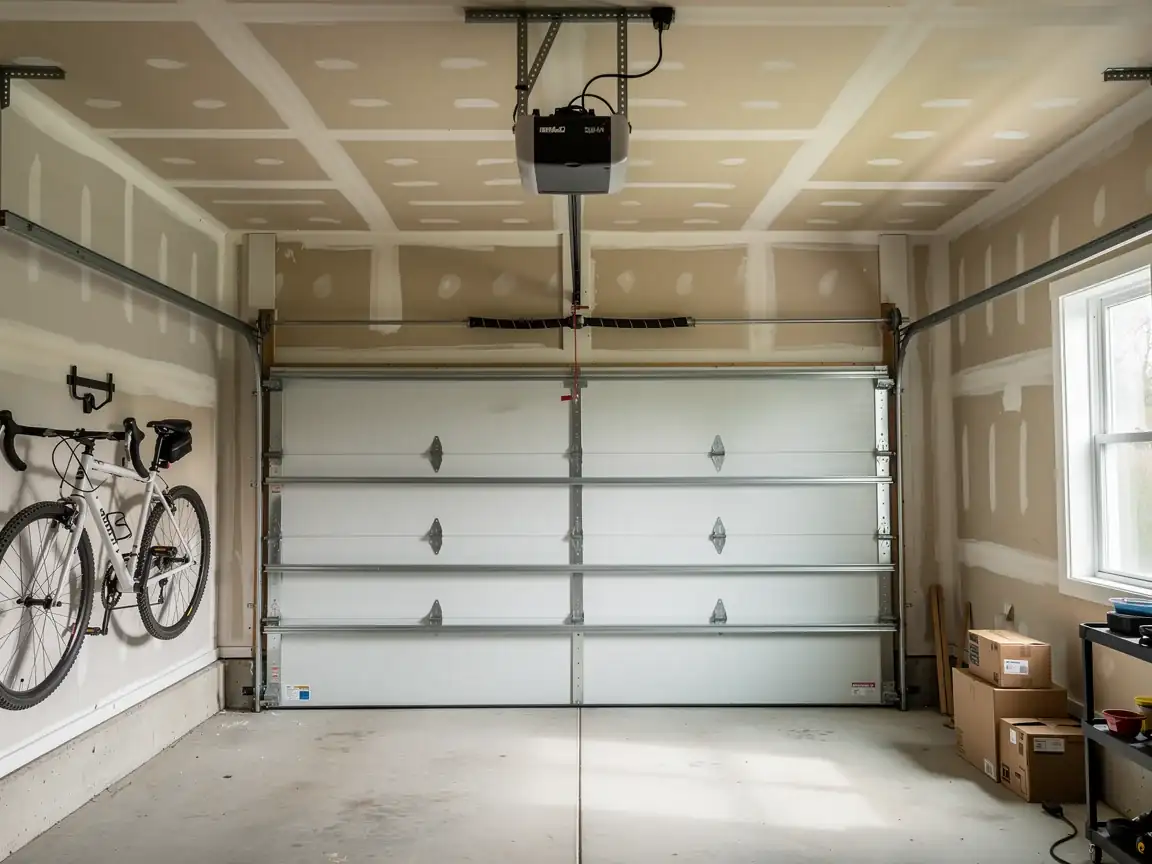
We start by separating the opener from the door. Before anything gets mounted, we check whether the top section has a factory reinforcement bracket or needs one added - on Lakewood's older stock, it usually needs one. We true up the track so the door isn't being pulled sideways as it travels, then match the opener's horsepower and drive type to the door's actual weight rather than defaulting to whatever's in stock. A heavier original wood door needs more lift than a lightweight steel replacement, and installing the wrong opener for the door is how you end up back at this same symptom in two years. Once mounted, we set the travel limits and force settings by hand and test the auto-reverse safety feature multiple times before we call the job done. We also check the photo-eye sensor alignment near the floor - a lot of older setups either never had one or had it knocked out of position, and that's not something we leave unresolved on an install.

Parts We Carry

We carry belt-drive and chain-drive opener units, mounting rail kits, reinforcement struts for older top panels, replacement photo-eye sensor pairs, and standard wall console and remote hardware on the truck for most installs. What we don't stock is every proprietary circuit board or remote frequency module tied to a specific older opener brand - if your existing unit used a discontinued system and you only need the motor head replaced rather than a full new opener, that part sometimes has to be special-ordered, and we'll tell you that before we start rather than after. For a straightforward new installation, though, we're usually equipped to complete the job in one visit from Long Beach, 5 miles out.
Why It Happens Here

Lakewood's housing stock is heavily concentrated around a 1957 median build year, part of the same mid-century tract construction pattern that shaped much of this service area. That timing matters for openers specifically because automatic garage door openers didn't become a standard builder-installed feature until years after most of these houses went up. The result, decades later, is a lot of garages where the door is original or close to it, and the opener is a later addition - sometimes the second or third opener that house has had - mounted on hardware that was never spec'd for powered lifting. With roughly 26,118 households in Lakewood and a lot of them in that same construction window, this isn't a rare edge case for us. It's close to the default condition we expect to find before we even open the garage.

How it works

From “it’s stuck” to “it’s fixed”

A quick, honest process - no guesswork and no surprises, start to finish.

  1. 1
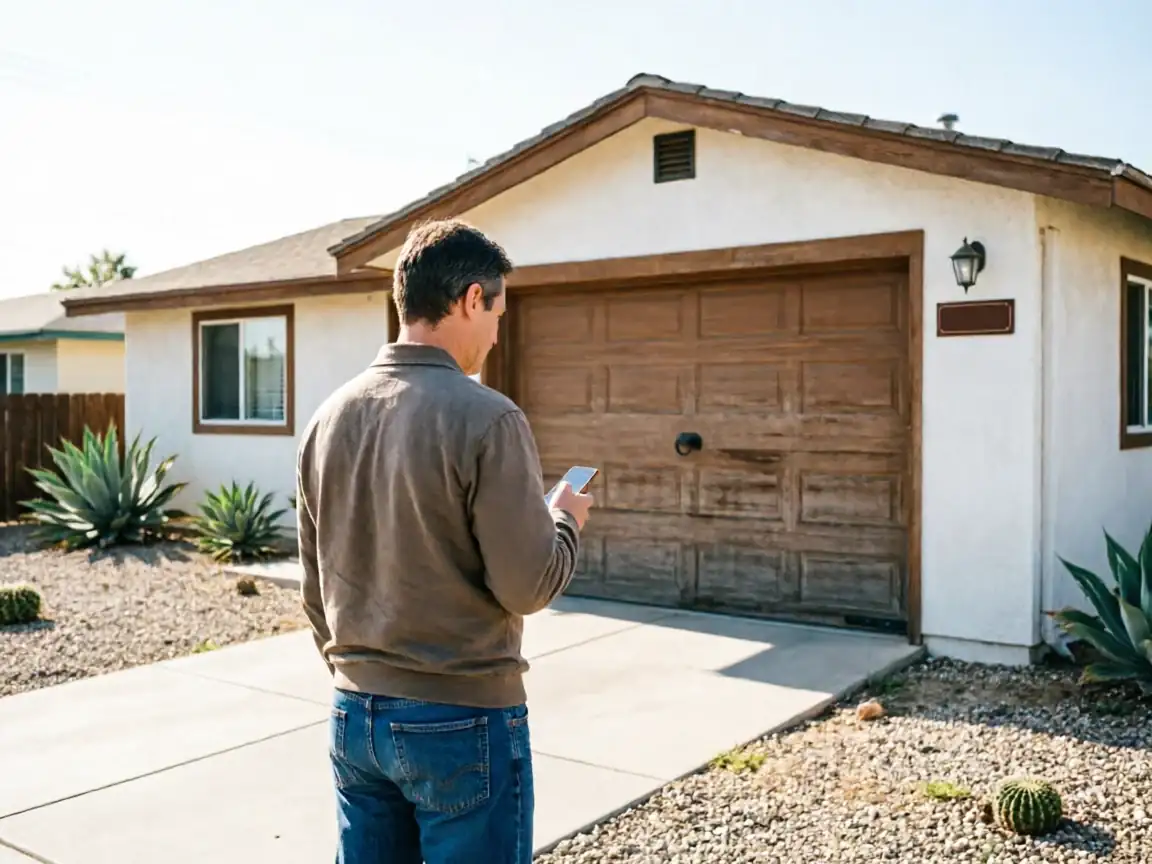
    A man stands in a driveway looking at his phone in front of a garage door.

    Tell us what’s wrong

    Describe the symptom - won’t open, loud bang, opener runs but the door won’t move.

  2. 2
    A technician works on a white garage door with visible springs and tracks.

    On-site diagnosis

    A technician tests the door under power and by hand and finds what actually failed.

  3. 3
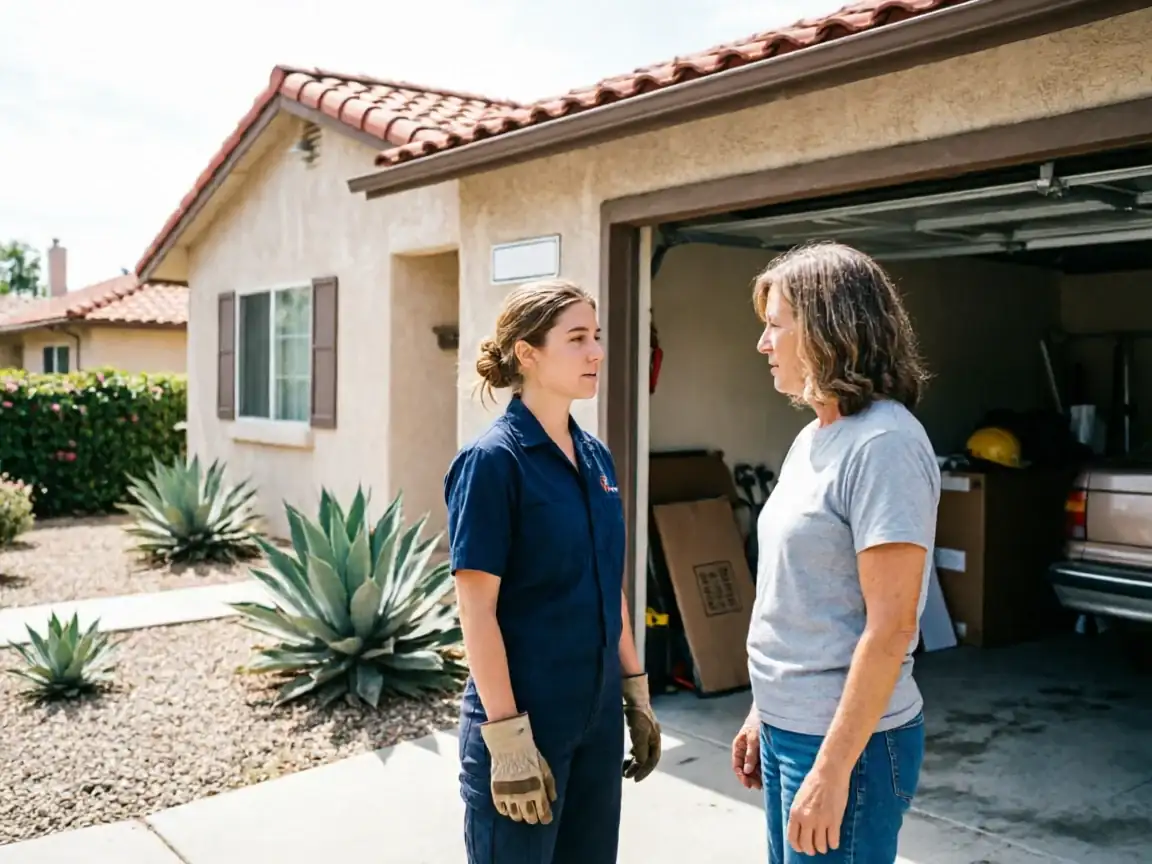
    A technician in a blue uniform talks to a woman in front of a garage.

    Clear, up-front plan

    You get the fix that’s needed and what drives the cost - before any work starts.

  4. 4
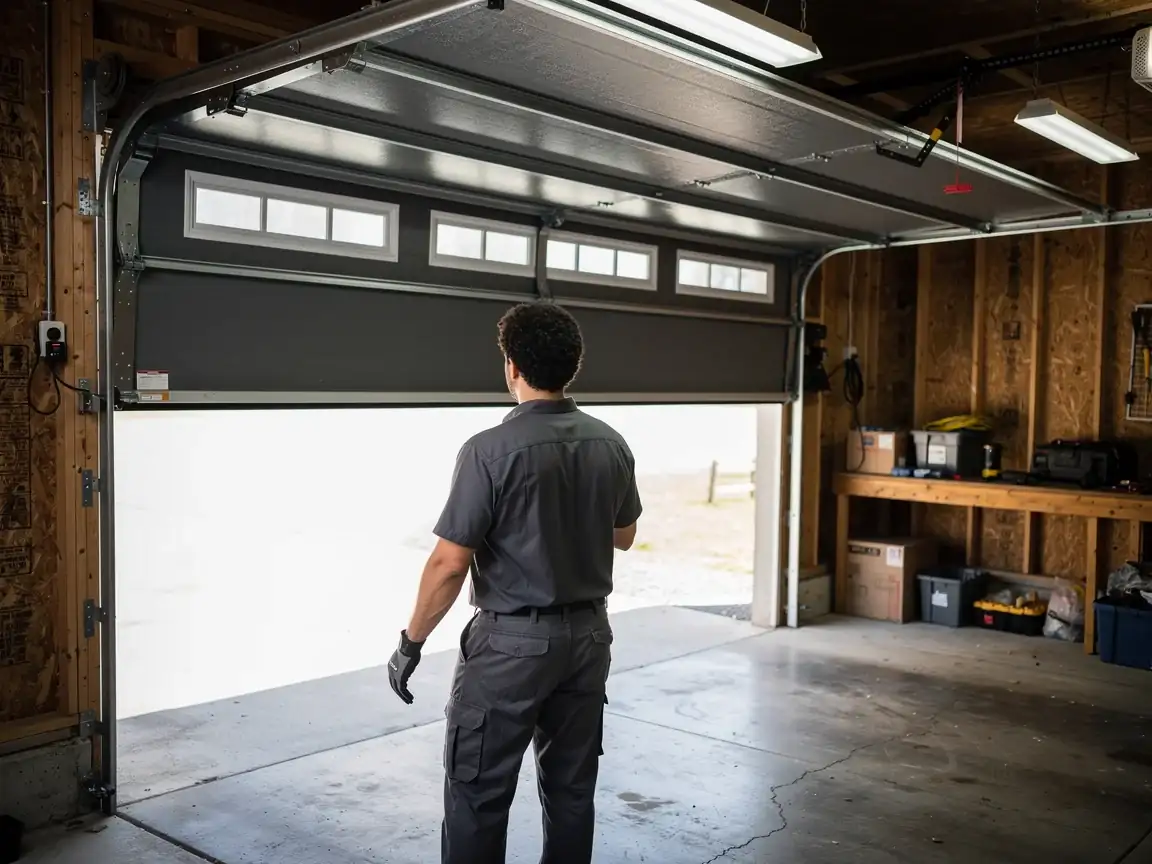
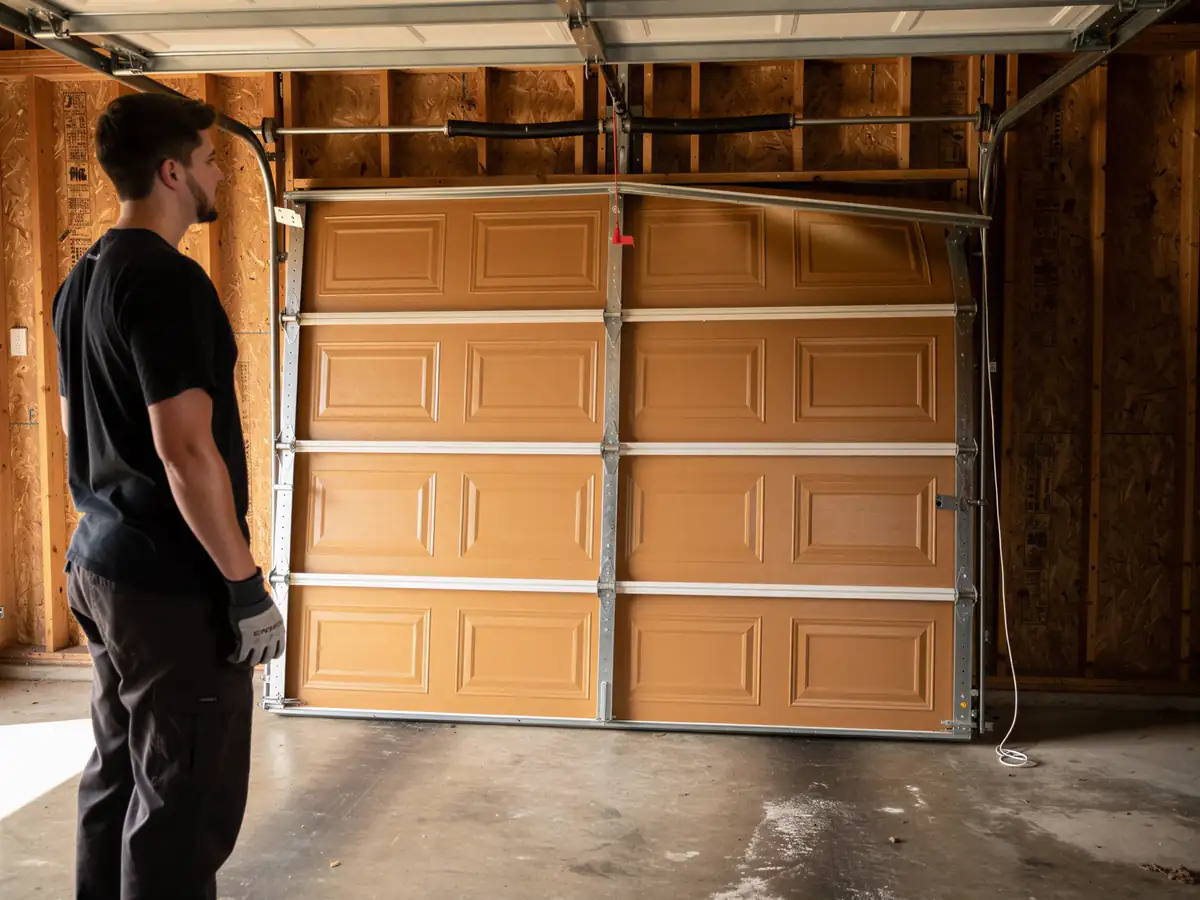
    A technician stands in a garage looking at a partially open garage door.

    Repaired & tested

    The repair is done, the door is set true and tested, and the work area left clean.

Not sure which repair your door needs in Long Beach, CA? Describe what it’s doing - every job starts with a diagnosis.

How we work

What to expect

Diagnosis firstEvery visit starts by finding what actually failed - not a pre-written parts list.
The right part for the doorSprings and openers matched to the door’s weight and age, so the fix holds up.
Straight answersWhen a repair makes more sense than a replacement - or the reverse - you hear it plainly.
Clean, careful workTension released safely, hardware set true, the door tested under power before we leave.
474,140Residents in Long Beach
7Garage door services
7Neighborhoods & suburbs
CAServing Long Beach, CA
Questions

Frequently asked

Straight answers about garage door repair in Long Beach. Still unsure? Ask us directly.

Do I need a new door if I'm just getting an opener installed?

Not usually. Most Lakewood doors from the 1957-era tract housing can take a properly matched opener once the top panel is reinforced and the track is aligned. We only recommend replacing the door itself if it's warped, split, or the track damage is beyond adjustment.

Why does my opener sound like it's straining even though it's new?

On older Lakewood garages, a new opener straining usually means the door itself is fighting the lift - an unreinforced top panel, a bent track, or a mismatch between opener horsepower and door weight. The fix is at the door and track, not the motor.

Can you match the opener to my existing remote or keypad?

If your current opener is a common, still-supported brand, often yes. If it's an older discontinued system, the matching remote or circuit board may need to be special-ordered - we'll check before the job starts so there are no surprises.

How far out do you travel for an opener install in Lakewood?

We work out of Long Beach, about 5 miles away, and cover Lakewood as part of our regular service area. We don't keep a branch location in Lakewood itself, but it's a standard stop on our route.

Ready to get your garage door sorted?

Tell us what it’s doing and where you are in Long Beach - we’ll take it from there.

Request a QuoteCall